You have looked at birthstones charts and want to buy jewelry. Are you looking for some ways to save money? Choose a pretty stone with inclusions that are not obvious. The term genuine gemstone simply means that the stone has the necessary characteristics for its identity. Old historical lists often assign the gemstones to different months and may substitute a few different stones. Ruby, sapphire, topaz, tanzanite, aquamarine, citrine, and others are routinely heated. Emerald is oiled. Beads may be dyed. Heat treating, diffusion, radiation, oiling, and dyeing are means of improving color. The gemstone industry assumes that these processes have been used, and sellers often do not volunteer the information. Look for a less expensive stone for your birth date. Dyed stones will be the least expensive. Assuming other qualities equal, natural color gemstones will be the most expensive. Astrological charts use different time periods that combine months. The qualities of color and clarity affect the price. Different countries have their own lists. Inclusions of other materials can detract from the clarity and reduce the value. Some are obviously more expensive than others. The brthstones are gemstones. You can find these different birthstone charts on many websites. There are many factors that contribute to the cost. Today many gemstones are color enhanced. The birthstones chart currently used in the United States contains less expensive alternates for most months. Gemstones are sold by weight. Some are obvious. Others may not have occurred to you.
4 New Definitions About Sterling Silver You do not Usually Want To listen to
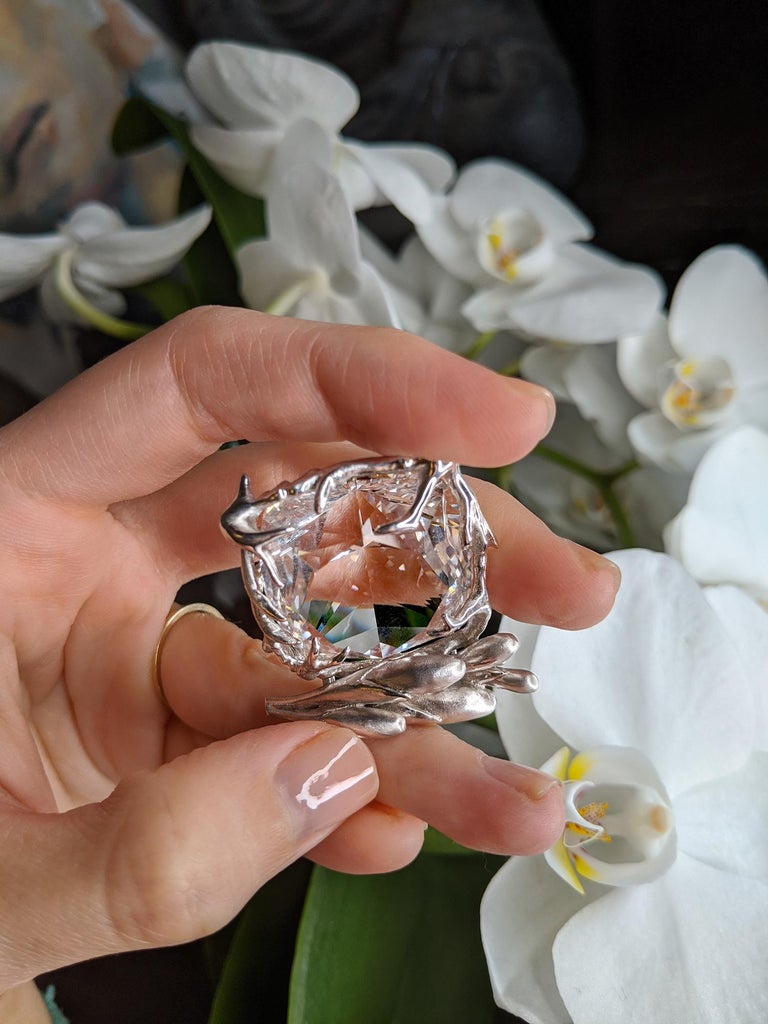 The larger the stone, the higher the price per carat. If you want natural color birthstones, you can probably find them as beads at an affordable price. Howlite is used to imitate turquoise. Beaded birthstone jewelry has other options for lower prices.Tiny spacer beads reduce the number of birthstone beads needed.Look for other less expensive beads in the design, or just a few birthstones as focal points. The more valuable gemstones, such as ruby, emerald, and sapphire are seldom made into large beads, unless they are dyed or contain many inclusions. Why? Because drilling a bead hole wastes valuable weight. The cost of gold and silver has increased drastically. Heavy ornate settings, clasps, or beads will increase cost.Different kinds of metal are priced from high to low in this order: 18k, 14k, 10k gold, vermeil (gold plated sterling silver), sterling silver, gold filled, gold plated, silver plated, gold or silver tone base metals. For example, one carat total weight of several small rubies will cost less than a one carat single ruby. When rough gemstone material comes out of the mine, the highest quality is set aside for cutting into loose stones for settings. You may find them in antique or vintage jewelry stores. They have the same characteristics as natural gemstones, but not the same inclusions. The colors are named after gemstones.Imitations should cost less than genuine gemstones. Glass imitations were popular in the 1940’s and 1950’s. They were often set in 10k gold rings. The process contains similarities to the natural creation, but time and quality are controlled by man. Prices will vary and may be determined by value as a collectible.Swarovski crystal is a popular substitute as a birthstone. These high quality stones are expensive, but should cost less than the same quality mined gemstone. Beaded jewelry may cost less. The best quality gemstone beads are often tiny faceted rondelle shapes. They are also sold by weight. The lower quality is used for beads. They may be other less expensive gemstones that are dyed. The difference in quality is not always obvious.
This term can raise the price. Birthstone jewelry that requires extra time, new design, buying new or unusual materials can be expensive.Instead use the seller’s existing design with substitution of in stock stones or beads. Attend craft fairs or gem shows. Does the seller have to pay any large business overhead costs? It is never free. Look for their websites. Fancy boxes and packing materials can raise the jewelry price or handling cost. The number between the mine and the jewelry seller is one of the bigget factors affecting price. Returning an item would be expensive.Handling costs also vary. It must either be included in a higher jewelry price or paid as added cost by the buyer.Actual shipping costs vary. Endorsements are expensive.If fashion jewelry containing imitation gemstones and base metal is sold in a well known or upscale clothing store, it can cost more than jewelry with genuine gemstones sold on a website. Jewelry that carries the name of a well known store, name brand, famous designer, or celebrity may cost more. If the seller offers options, compare their costs.If you buy directly from a country where labor costs are low, the savings may be offset by high international shipping. Look for information on the About Us page.
Welsh Government strategy on the internal use of the Welsh language. Mae’r ddogfen yma hefyd ar gael yn Gymraeg. The First Minister has also pledged to “mainstream” the Welsh language into the development of policy and to the way we work more generally. But its future across Wales cannot be taken for granted. This file may not be fully accessible. Set in this context, the Welsh Government’s goal for the Welsh language within the organisation is that by 2050 all staff working for the Welsh Government will be able to understand Welsh. This is the Welsh Government’s vision for the Welsh language in Wales (Cymraeg 2050: A million Welsh speakers, Welsh Government, 2017). It is to see, by 2050, a million speakers using the language in every aspect of their lives, and doubling the percentage of people in Wales who speak and use the language daily. Implementing that vision will involve generational change, halting the decline of the last century. We are proud of the Welsh language and want it to thrive. It is part of our shared inheritance and identity as a nation. The Welsh language – y Gymraeg – is integral to our culture, our heritage and our daily lives. This will enable staff to work in Welsh from day to day and there will be a significant increase in the use of the language as a result. As a result the Welsh Government has already committed to “… Welsh by our own workforce” (Theme 2 Increasing the Use of Welsh, chapter 6 The Workplace). The year 2050: the Welsh language is thriving, the number of speakers has reached a million, and it is used in every aspect of life. There is an onus on us to take proactive steps to support and increase the use of the language, and to pass it on to future generations. This is something we can all do together. Welsh is spoken for cultural, commercial, social and emotional reasons, but it is also a vocational skill – a skill that should be better recognised and utilised. So our goal is that the Welsh Government should gradually become a truly bilingual organisation; one in which it is routine for the Welsh and English languages to both be used naturally and interchangeably. An important part of the vision involves renewing the association between the language and the workplace.
It is something that can unite us as a nation. This is especially the case in so far as those learning Welsh in our schools are concerned, who should understand that the language will be a useful skill for them in the workplace. The language is not exclusive to those who can speak it today. We know that what we do within the Welsh Government will influence other parts of the public sector in Wales. It is important to be clear what is meant by a bilingual organisation. Eventually a choice of language will be available operationally within the organisation, meaning we will be able to routinely choose whether to communicate (orally and in writing) in Welsh or English, or indeed both. Our strategy on the use of Welsh in the workplace is, in many respects, set by the political direction and legal framework that have already been established; to promote the language and to increase its use. But while some are comfortable speaking Welsh – more often than not as the language was passed on to them by their families – many are not. This has relevance that goes beyond being able to provide all outward facing services and internal formal communications in both languages. With that in mind this strategy is underpinned by the following principles. Making a long term commitment and leading the way: change will be incremental and will happen over time, but we intend to lead by example in the way we promote use of the language in the workplace. Investing in staff and providing opportunities to learn Welsh and develop language skills: it is crucial that effective and convenient training is provided, with people given both time and motivation to continuously improve their Welsh language skills. Statistics show that 86% of people across Wales feel that the language is something to be proud of. Remaining an open, inclusive and diverse organisation: everyone has the potential to be a Welsh speaker and this strategy does not conflict with our commitment to being open, inclusive and diverse – although Welsh language skills will progressively be needed for more posts, developing a bilingual workforce does not mean (or imply) those skills being a universal pre-requisite for joining the Welsh Government. However, we are conscious also that steps taken to increase use of the language must be reasonable and proportionate, which means that becoming a bilingual organisation will involve change that happens gradually. This is why our long term goal is to become a bilingual organisation. We need to establish a common understanding that the Welsh language belongs to us all whatever our linguistic background. We are conscious of how using Welsh in the workplace can give the language more purpose and relevance.