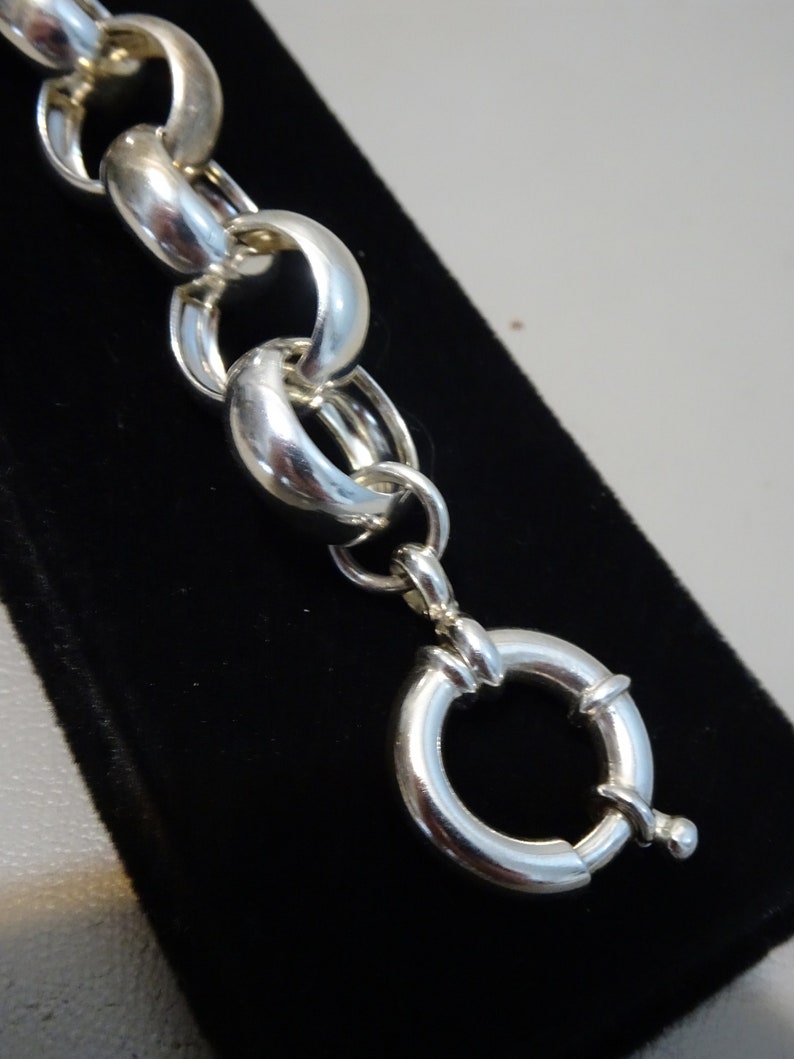
 Frank Ocean on Monday opened his new New York City luxury store Homer, which sells goods from his luxury brand of the same name. Hand on my heart, this project has kept my mind moving and my imagination turning throughout it all. Mostly because it’s five letters and the dotcom was available,’ Ocean said of the name, ‘but also because Homer is considered the father of history and history is meant to endure – the same as diamonds and gold. Tons of options: The store, located in the Bowery, features items including silk scarves and high-end jewelry, which is made in Italy from 18K gold, sterling silver, enamel and lab-grown diamonds, with a price range from $395 to $1.9 million. A catalog for the brand – which Ocean, 33, is working on with Tyrone Lebon – showcases a 25-piece collection with a creative focus from ‘heritage as a fantasy’ and ‘childhood obsessions,’ the company said in a statement. Ocean explained how he came to name the company Homer. The store, located in the Bowery, features items including silk scarves and high-end jewelry, which is made in Italy from 18K gold, sterling silver – backtoglamour.com – , enamel and lab-grown diamonds, with a price range from $395 to $1.9 million. Ocean took to Instagram last week to explain his focus on the new business endeavor, The Guardian reported. The physical location was designed by Ocean as well as architects Michael Abel and Nile Greenberg, according to Variety. All of my work now is dedicated to my family.
This story may have a familiar ring to it – Scotland in a currency union with the rest of the UK, even though relations can be hostile. The evidence is based, first, on archaeologists’ finds of hoards of coins, allied to the exceptionally good production records of England’s mints. They have helped historians map where coins were hidden or dropped. Scots mint their own currency, but it becomes devalued in the eyes of traders in the City of London. Less well known was its use across Wales, the Isle of Man, in Ireland and in Scotland. Ireland had a fully convertible currency union with England’s silver-based coins from 1208. Hoards suggest there was also some influx of Scottish groat coins. From this trove of numismatic treasure, they can deduce how widespread coinage was, from different mints in different parts of the country. The evidence that is available has been drawn together by a coin expert at the Fitzwilliam Museum in Cambridge. Export of Irish coins was forbidden in 1534, while English coins still turned up in Ireland after that. Martin Allen’s academic paper was presented last weekend at the conference of the Economic History Society. So the currency union falls apart, and Scotland runs its own currency and affairs. But it’s worth knowing for the next time you get into an argument with a London cabbie who refuses to accept your Scottish banknote. Wales appears to have become fully integrated at least as far back as the Norman invasion of 1066, and that is the way it has stayed to this day. With the help of a lot of metal detectors, he has unearthed some surprising findings, which might resonate a little with economics and politics seven centuries later. England’s currency was already used on parts of the continent, and would become one of the most trusted forms of European exchange in the Middle Ages. Yes, we’re talking medieval economics here – a much under-rated subject, and partly because the evidence base is very sketchy. It does so for the next 200 years. That is, until James VI becomes James I of Great Britain, and 12 Scottish pennies are pegged to a single English penny.
It is not recorded what they spent it on.
 Irish coinage continued until the early 19th century, pegged to English values. What this history means is that the Wars of Independence were fought while the countries had a single currency. It is not recorded what they spent it on. The Scots king took control of Carlisle in 1136, gaining its mint, and subsequently setting up mints in Scotland. Because credit was so undeveloped, and coins had their own gold and silver standard, it is possible to deduce the underlying health of the economy in the 13th century. If English coins were circulating in Scotland before then, this historian says there has not been much evidence of them being found. Apparently, English soldiers brought quite a lot of their currency north, presumably knowing they could get change for an Anglo-minted coin. Having itself been a disunited kingdom, Scots did not have their own coinage until David I invaded England, according to Martin Allen. Yet it was without any Scottish influence on monetary policy in London. William Wallace and Robert the Bruce will have funded their wars in sterling. Full integration into the sterling zone may have taken around a century.
English coins still circulated in Scotland but, it seems, not that widely.
By those measures, the Scottish economy was growing quite healthily, and the Irish economy was much poorer. I have just been informed, by email, of a poll – carried out for Ingenico Group, “global leader in seamless payments” – which found that 71% of people in the payments industry think cash could have become obsolete in Britain within 10 years. So 1393 was the end of the road for Scotland’s part in the medieval sterling zone. Later in the 14th century, things went, as it were, south. A further YouGov poll suggests 43% of the public think the same. This did not require watching screens of exchange rate spreads on global currency markets. With a population of 800,000, it looks like currency per head was around 38 pennies, three times more than in Ireland, but 20 pennies less than in England and Wales. The Scottish kings sought to bolster confidence in the exchange rate, but failed. English coins still circulated in Scotland but, it seems, not that widely. In the later 1300s, Scottish coins were devalued, literally. Could this be a foretaste of “the debasement of 2020” – when the coin melts, the paper note is folded, and the only people continuing to say that “cash is king” are historians? The Debasement of 1393′ was an ignominious event, and one which is unaccountably absent from school text books about Scottish history. It was about the silver content in coins being reduced. Later coin finds point to “bullion famines” when it was hard to get new supplies of gold (backtoglamour.com) and silver. Cash was, at least, an instantly recognisable part of life in the British Isles through almost all of the last millennium. Its modern-day parallel was 16 September 1992, when sterling was ejected from the European Monetary System. But for how much longer? By 1290, Martin Allen says there might have been around £125,000 of currency in circulation in Scotland, having seen growth of around 230% over the previous 40 years. It was an expensive fiasco, but by letting the pound devalue, it is seen by some now as re-starting Britain’s economic independence. The southerners accounted for no more than 80% of the economy during the first sterling currency union. The important point for medieval economic historians – and one that certainly resonates today – is to note that the sterling zone was not just about England and Wales. One of them was when trade with Sudan seized up – a reminder that the economy of the Middle Ages was already globalised.
Sterling Silver Cz Rings Wholesale
If you have just about any questions with regards to exactly where and also how to work with “earrings” – myntra.com – , it is possible to contact us from the web-page.