Children’s jewellery can be purchased in countless shops and from Internet retailers in the United Kingdom. Customers will find that the jeweller will also feature other compatible beads, and one other thing that sets them apart from the competitors is that all of the jewellery is lead and nickel free, and is finished with a coating to preserve its shine for a longer period of time. Many of the pieces in the jeweller’s collection, especially the children’s charms, can be used as collector’s items and they can be perfect for starting a tradition on special occasions. Using only the finest material, all of the pieces in the jeweller’s children’s collection are genuine sterling silver, and they have been tested to guarantee that they are in accordance with the standards set by the United Kingdom. The jeweller’s high quality bead charms are a wonderful way to share a gift with kids and family and the jewellery is designed to be a special gift that will be treasured for a lifetime. All the products are made from high quality, genuine, nine two five sterling – look at more info https://backtoglamour.com/blog/2020/04/10/silver-stream-gospel-music-festival-about-the-festival-2/ – silver and a nine two five stamp on every single item that the jeweller sells guarantees this. A child’s first piece of jewellery will always be a precious one, and there are many high quality jewellery stores to shop for that very special gift. This will make sure that these items can be given to children without any fear of lead based illness that can be found in cheaply manufactured jewellery. Children’s jewellery should be designed and manufactured to high quality standards, in order to meet the needs of safety, affordability and style. From infant to toddler to young lady or gent, the jeweller’s lovely selection of lockets, bangles, cultured pearls, crosses and earrings are perfectly designed to suit every special occasion from a holiday to a special achievement. The jeweller’s mission is not only to provide many different high quality jewellery pieces at reasonable prices, but also to ensure that all the customers receive quality service regardless of age of the intended wearer.
Sterling Silver Jewelry Chain Mail
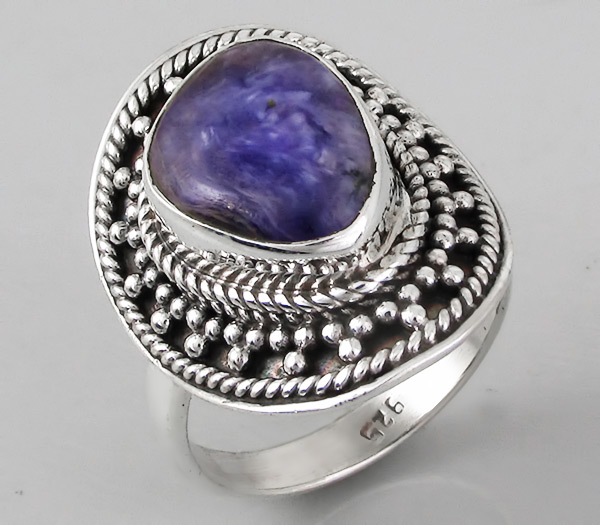 A religious milestone can be a perfect occasion to present a special, meaningful cross pendant necklace from the children’s fine jewellery collection. Customers can also shop adorable engraved girls’ heart lockets and girls’ earrings to the exclusive bracelets they won’t find anywhere else. Parents and caregivers can start Looking for Children’s Jewellery in the UK to shop for the best and most adorable gold and silver pearl baby bracelets for the perfect christening gift as well as gifts for any other occasion. Birthdays, holidays, start of school and more, there are so many moments in a child’s life that can be commemorated forever with a piece of high-quality fine jewellery that they will treasure forever. Considering the uncertainty of trade and buying jewellery elsewhere due the decision to leave the European Union, the safest purchase would be from a jewellery store within the United Kingdom. Customers love the shop’s wide selection of children’s jewellery. That will ensure the shopper that they can find the high quality item that they are looking for.
Welsh Government strategy on the internal use of the Welsh language. Mae’r ddogfen yma hefyd ar gael yn Gymraeg. The Welsh language – y Gymraeg – is integral to our culture, our heritage and our daily lives. It is part of our shared inheritance and identity as a nation. This will enable staff to work in Welsh from day to day and there will be a significant increase in the use of the language as a result. The year 2050: the Welsh language is thriving, the number of speakers has reached a million, and it is used in every aspect of life. So our goal is that the Welsh Government should gradually become a truly bilingual organisation; one in which it is routine for the Welsh and English languages to both be used naturally and interchangeably. An important part of the vision involves renewing the association between the language and the workplace. This file may not be fully accessible. The First Minister has also pledged to “mainstream” the Welsh language into the development of policy and to the way we work more generally. There is an onus on us to take proactive steps to support and increase the use of the language, and to pass it on to future generations. Implementing that vision will involve generational change, halting the decline of the last century. Welsh is spoken for cultural, commercial, social and emotional reasons, but it is also a vocational skill – a skill that should be better recognised and utilised. We are proud of the Welsh language and want it to thrive. As a result the Welsh Government has already committed to “… Welsh by our own workforce” (Theme 2 Increasing the Use of Welsh, chapter 6 The Workplace). This is the Welsh Government’s vision for the Welsh language in Wales (Cymraeg 2050: A million Welsh speakers, Welsh Government, 2017). It is to see, by 2050, a million speakers using the language in every aspect of their lives, and doubling the percentage of people in Wales who speak and use the language daily. This is something we can all do together. But its future across Wales cannot be taken for granted. Set in this context, the Welsh Government’s goal for the Welsh language within the organisation is that by 2050 all staff working for the Welsh Government will be able to understand Welsh.
It is something that can unite us as a nation. Remaining an open, inclusive and diverse organisation: everyone has the potential to be a Welsh speaker and this strategy does not conflict with our commitment to being open, inclusive and diverse – although Welsh language skills will progressively be needed for more posts, developing a bilingual workforce does not mean (or imply) those skills being a universal pre-requisite for joining the Welsh Government. But while some are comfortable speaking Welsh – more often than not as the language was passed on to them by their families – many are not. We need to establish a common understanding that the Welsh language belongs to us all whatever our linguistic background. The language is not exclusive to those who can speak it today. Investing in staff and providing opportunities to learn Welsh and develop language skills: it is crucial that effective and convenient training is provided, with people given both time and motivation to continuously improve their Welsh language skills. This is why our long term goal is to become a bilingual organisation. We are conscious of how using Welsh in the workplace can give the language more purpose and relevance. However, we are conscious also that steps taken to increase use of the language must be reasonable and proportionate, which means that becoming a bilingual organisation will involve change that happens gradually. Making a long term commitment and leading the way: change will be incremental and will happen over time, but we intend to lead by example in the way we promote use of the language in the workplace. Statistics show that 86% of people across Wales feel that the language is something to be proud of. With that in mind this strategy is underpinned by the following principles. This is especially the case in so far as those learning Welsh in our schools are concerned, who should understand that the language will be a useful skill for them in the workplace. This has relevance that goes beyond being able to provide all outward facing services and internal formal communications in both languages. It is important to be clear what is meant by a bilingual organisation. We know that what we do within the Welsh Government will influence other parts of the public sector in Wales. Our strategy on the use of Welsh in the workplace is, in many respects, set by the political direction and legal framework that have already been established; to promote the language and to increase its use. Eventually a choice of language will be available operationally within the organisation, meaning we will be able to routinely choose whether to communicate (orally and in writing) in Welsh or English, or indeed both.
Sterling Silver Charms Bracelets
This choice will be made possible by all staff being able to at least understand Welsh. This will of course take time and will require a long term commitment (firstly) to continuously improving our language skills and (secondly) to developing a working culture that understands and respects bilingualism. The shorter term objective will be reviewed in 2025 and a new objective and associated actions will be set for the following 5 year period – a process that will continue until the 2050 goal is reached. Both of these will be required, as – crucially – is plenty of time and support to adapt. These, in turn, contribute to reaching the 2050 goal. The renewed focus on the language is to be led not just at the political level but also by senior officials. As well as setting a long term 2050 goal we are also setting a shorter term objective for the period up to 2025 and 10 actions designed to help meet that objective. The principle of continuous improvement over the long term will be based on the scale currently used to assess Welsh language skills. They will be expected to lead by example in promoting use of the language and making its importance to the organisation clear. Our focus will be on encouraging people to learn and to continuously improve. We envisage a process under which the strategy and changes in policy adopted under it are reviewed every 5 years. Our goal is to allow staff increased opportunities to acquire and then use their Welsh language skills in the workplace, and eventually allow for language choice. We want and need more Welsh Government staff to have Welsh language skills they can use in the workplace. Our goal is to become a bilingual organisation by 2050, but over the first 5 years our objective is to see the Welsh Government become an exemplar organisation in increasing internal use of the language when assessed against comparable public sector organisations in Wales. One of the most fundamental elements to the success of this strategy will be the learning and development on offer to staff across all levels of proficiency. They will help others to use, learn and improve their Welsh language skills – and develop skills of their own. This strategy envisages reaching its goal more than 30 years from now, so for obvious reasons it will need to be periodically reviewed and changed. Learning Welsh and facilitating its use by Welsh speakers in day to day work will be a business need across the organisation, and line managers will need to adhere to that principle by demonstrating personal leadership. This can be done in 2 ways; by existing staff starting to learn or improve and by more recruitment of those who already have Welsh language skills.