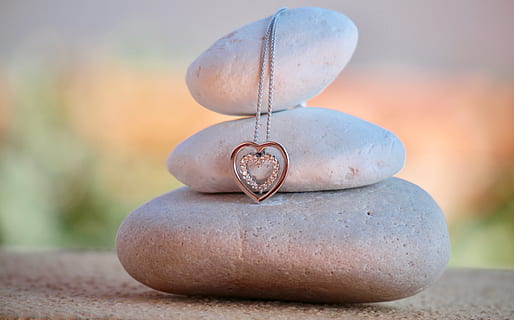
 Nothing beats the sparkle of a diamond, but engagement rings aside, few of us can afford the genuine article. Diamonds are sold by the carat, with one carat measuring 6.5mm in diameter, roughly the size of a garden pea. 800 (around £600). By comparison, a one-carat natural diamond will start from at least £3,000 for a low-grade stone without any settings. A handful of UK jewellers already sell laboratory-grown diamonds – Nightingale, Brilliant Earth and Kinetique all sell online – but without the same economies of scale as a global power-player like De Beers, the prices are higher at around £1,500-£1,800 per carat. ‘It’s the difference between 1,000-thread Egyptian cotton and regular, mass- manufactured cotton,’ says Scott Thompson, founder of Carat London, which specialises in synthetic stones. Grown in a laboratory, a tiny seed of real diamond is blasted with high-pressure, extreme temperatures and carbon atoms to mimic a three-billion-year process in just three weeks. It’s a volte-face for centuries-old De Beers, which has always been firmly against anything that hasn’t been dug up from the earth. Soon, however, grand jeweller De Beers will have a solution: a range of reasonably priced ‘almost-diamonds’. Savvy shoppers have been faking their diamonds for years. At 44, she had the perfect life. A one-carat laboratory-grown diamond from De Beers’s Lightbox Jewelry collection (which will initially launch online in the U.S. The truth is, really savvy shoppers have been faking their diamonds for years, opting for high-grade zirconium oxide, commonly known as, whisper it . While ‘cz’, as it’s known in the business, is often sneered at (you’d be forgiven if cracker prizes spring to mind) the good stuff is on a different level. The result? A stone that looks like a diamond, with the same physical and chemical characteristics, but which costs considerably less.
Prices vary depending on the level of workmanship involved.

Dervla also notes that customers are aware that opting for a synthetic diamond avoids the ethical implications involved with the real deal, whether it’s the environmental impact (1,750 tons of earth have to be extracted to find a one-carat rough diamond), or the human cost of child labour and ‘blood diamonds’, where stones mined in conflict zones fund warlords. ‘Keep your carat size within the realms of possibility,’ she says. Flanking a real engagement ring with two of her eternity bands is another bargain bling-boost: a single 3.5mm cz-encrusted band in 18ct gold is £55. ‘Too big and your friends will know instantly that it’s not real. Her clients aren’t at all embarrassed about their not-so natural jewels. Belinda’s fakes may have saved a marriage or two, as well. Those in the know go to Belinda for their ‘diamond’ studs (her round-cut ‘super studs’ are £50) and tennis bracelets (from £100). Whether you plan to save up for a top-grade, lab-grown diamond, or you’ve been converted to the joys of cz, would-be fakers who’d prefer not to be rumbled should heed Belinda’s number-one tip: don’t get too carried away. ‘Quite the reverse,’ she says, ‘people take the attitude of “look how clever I am”. Ethics aside, the big benefit of a cz diamond is practicality. ‘We supplied her with one of our Fab Fakes, and ever since she’s been walking around with a £12 stone in one ear, and a £4,000 stone in the other – and her husband is none the wiser! As well as supplying classic pieces you can wear every day, and everywhere, without fretting (cz diamonds are sometimes referred to as ‘travel diamonds’ for this reason), a big part of Belinda’s trade is one-off event dressing, such as mothers of the bride who want to impress guests. ‘One lady came in brandishing a single diamond earring – the other was lost on a beach and she didn’t want to tell her husband. ‘It’s not going to break your heart or bank balance if you lose them,’ says Belinda Scott, whose Fab Fakes have been worn by the Duchess of Cambridge and the Countess of Wessex.
Sterling silver is an alloy of silver containing 92.5% by weight of silver and 7.5% by weight of other metals, usually copper. 1142) uses the Latin forms libræ sterilensium and libræ sterilensis monetæ. Fine silver, which is 99.9% pure silver, is relatively soft, so silver is usually alloyed with copper to increase its hardness and strength. Byzantine solidus, originally known as the solidus aureus meaning ‘solid gold‘ or ‘reliable gold‘. In support of this he cites the fact that one of the first acts of the Normans was to restore the coinage to the consistent weight and purity it had in the days of Offa, King of Mercia. 1300) with the explanation that the coin was originally made by moneyers from that region. Recent examples of these alloys include argentium, sterlium and silvadium. By 1854, the tie between Easterling and Sterling was well-established, as Ronald Zupko quotes in his dictionary of weights. In 1260, Henry III granted them a charter of protection. The claim has been made in Henry Spelman’s glossary (Glossarium Archaiologicum) as referenced in Commentaries on the Laws of England by William Blackstone. Another argument is that the Hanseatic League was the source for both the origin of its definition and manufacture, and in its name is that the German name for the Baltic is Ostsee, or ‘East Sea’, and from this the Baltic merchants were called “Osterlings”, or “Easterlings”. One of the earliest attestations of the term is in Old French form esterlin, in a charter of the abbey of Les Préaux, dating to either 1085 or 1104. The English chronicler Orderic Vitalis (1075 – c. Such elements include germanium, zinc, platinum, silicon, and boron. Their Kontor, the Steelyard of London, was called Easterlings Hall, or Esterlingeshalle. The Hanseatic League was officially active in the London trade from 1266 to 1597. This etymology may have been first suggested by Walter de Pinchebek (c. The word in origin refers to the newly introduced Norman silver penny. According to the Oxford English Dictionary, the most plausible etymology is a derivation from a late Old English steorling (with, or like, a ‘little star’), as some early Norman pennies were imprinted with a small star. Because the League’s money was not frequently debased like that of England, English traders stipulated to be paid in pounds of the Easterlings, which was contracted to sterling. The British numismatist Philip Grierson disagrees with the “star” etymology, as the stars appeared on Norman pennies only for the single three-year issue from 1077 to 1080 (the Normans changed coin designs every three years).
This would have been perceived as a contrast to the progressive debasement of the intervening 200 years, and would therefore be a likely source for a nickname. REX (“King Henry”) but this was added later, in the reign of Henry III. The colonies lacked an assay office during this time (the first would be established in 1814), so American silversmiths adhered to the standard set by the London Goldsmiths Company: sterling silver consisted of 91.5-92.5% by weight silver and 8.5-7.5 wt% copper. In Colonial America, sterling silver was used for currency and general goods as well. 12th century in the area that is now northern Germany. Although silversmiths of this era were typically familiar with all precious metals, they primarily worked in sterling silver. 3⁄4 pennyweights of alloy, with 20 pennyweights to the troy ounce. A piece of sterling silver dating from Henry II’s reign was used as a standard in the Trial of the Pyx until it was deposited at the Royal Mint in 1843. It bears the royal stamp ENRI. Colonial silversmiths used many of the techniques developed by those in Europe. Stamping each of their pieces with their personal maker’s mark, colonial silversmiths relied upon their own status to guarantee the quality and composition of their products. Between 1634 and 1776, some 500 silversmiths created items in the “New World” ranging from simple buckles to ornate Rococo coffee pots. Casting was frequently the first step in manufacturing silver pieces, as silver workers would melt down sterling silver into easily manageable ingots.