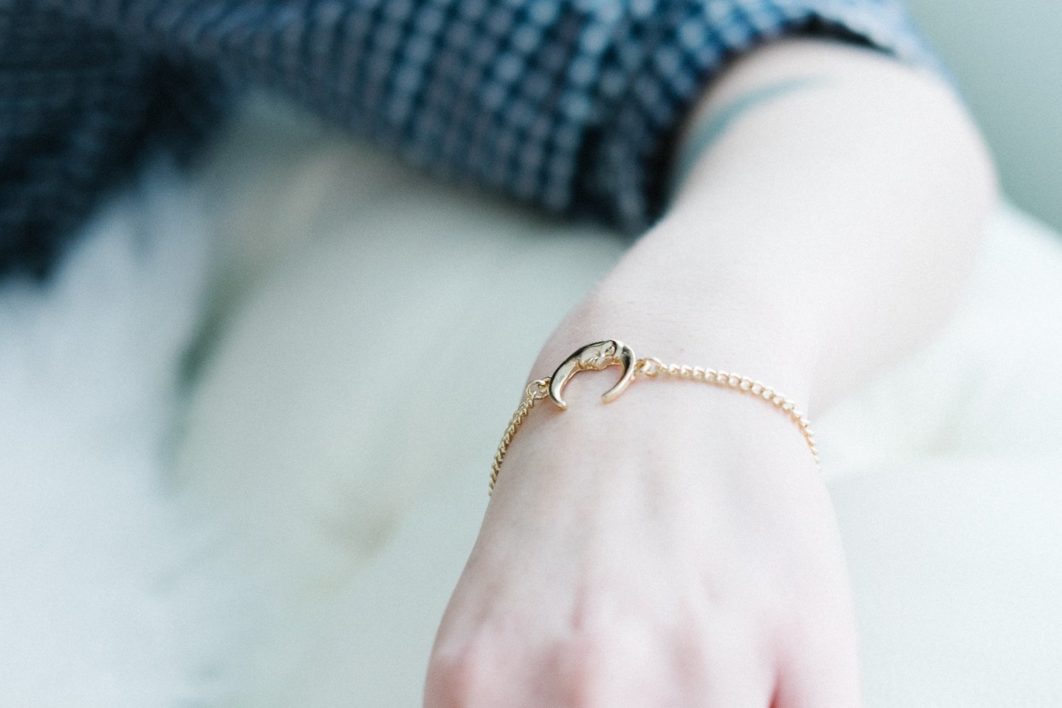
 European beads can be easily cleaned without being removed from the bracelet. Acrylic European beads: available in different shapes like heart, star, skull, fruit, oval, flower and many more, with platinum and silver color core options. It is available in different core styles like silver color core, platinum color core, nickel color core and golden core and shapes like fish, heart, dog, mouse, frog and many more. The material used can vary from gemstone to bamboo leaf agate depending upon the shape and core used. Glass and European beads: it is perfect to use with snake chains, wide leather laces and fiber cords with a wide diameter. It requires a jewelry polishing cloth which is readily available at most of the jewelry stores. It is not recommended to use jewelry polish or paste to clean them. It is available in round, cube and rondelle shape with nickel, silver, platinum, sterling and mixed color core options. Shell European beads: extra-large driller holes to be used leather cord and ribbon strands with silver, sterling, platinum and nickel core options. Gemstone beads: low cost, light weight colorful beads making jewelry look glamorous when incorporated in bracelets, necklaces and anklets. It is available in drum, barrel and round shape with silver, platinum and golden color core. While crystal beads bring elegance and shine to the snake chains, leather laces and fiber cords. They are further divided as thread bore and smooth bore depending upon how the beads are threaded on the bracelet. It is available in square and abacus shape with silver and platinum color core. It is available in different finish styles like lead free, nickel free and shapes like tube, cube, fruit, heart, round, flower and many more. Polymer clay European beads: Light weight, larger hole clay beads ideal to match necklaces and bracelets. Foil Glass European beads: made of foil glass and brass core, it gives fascinating glamour to the beads making the design look very distinctive. Lamp work European beads: it includes those with large bead holes, charming lamp work to be used with leather laces and fiber cords. Metal European Beads: these are made of alloy with extra holes to be used with snake chain or leather laces to make it more elegant and designer.
 Sterling silver is an alloy of silver containing 92.5% by weight of silver and 7.5% by weight of other metals, usually copper. According to the Oxford English Dictionary, the most plausible etymology is a derivation from a late Old English steorling (with, or like, a ‘little star’), as some early Norman pennies were imprinted with a small star. Because the League’s money was not frequently debased like that of England, English traders stipulated to be paid in pounds of the Easterlings, which was contracted to sterling. Their Kontor, the Steelyard of London, was called Easterlings Hall, or Esterlingeshalle. By 1854, the tie between Easterling and Sterling was well-established, as Ronald Zupko quotes in his dictionary of weights. 1300) with the explanation that the coin was originally made by moneyers from that region. The claim has been made in Henry Spelman’s glossary (Glossarium Archaiologicum) as referenced in Commentaries on the Laws of England by William Blackstone. The word in origin refers to the newly introduced Norman silver penny. In 1260, Henry III granted them a charter of protection. Byzantine solidus, originally known as the solidus aureus meaning ‘solid gold‘ or ‘reliable gold’. Recent examples of these alloys include argentium, sterlium and silvadium. 1142) uses the Latin forms libræ sterilensium and libræ sterilensis monetæ. Such elements include germanium, zinc, platinum, silicon, and boron. The British numismatist Philip Grierson disagrees with the “star” etymology, as the stars appeared on Norman pennies only for the single three-year issue from 1077 to 1080 (the Normans changed coin designs every three years). One of the earliest attestations of the term is in Old French form esterlin, in a charter of the abbey of Les Préaux, dating to either 1085 or 1104. The English chronicler Orderic Vitalis (1075 – c. The Hanseatic League was officially active in the London trade from 1266 to 1597. This etymology may have been first suggested by Walter de Pinchebek (c. In support of this he cites the fact that one of the first acts of the Normans was to restore the coinage to the consistent weight and purity it had in the days of Offa, King of Mercia. Fine silver, which is 99.9% pure silver, is relatively soft, so silver is usually alloyed with copper to increase its hardness and strength. Another argument is that the Hanseatic League was the source for both the origin of its definition and manufacture, and in its name is that the German name for the Baltic is Ostsee, or ‘East Sea’, and from this the Baltic merchants were called “Osterlings”, or “Easterlings”.
Sterling Silver Spacer Beads
This would have been perceived as a contrast to the progressive debasement of the intervening 200 years, and would therefore be a likely source for a nickname. REX (“King Henry”) but this was added later, in the reign of Henry III. In Colonial America, sterling silver was used for currency and general goods as well. Although silversmiths of this era were typically familiar with all precious metals, they primarily worked in sterling silver. Colonial silversmiths used many of the techniques developed by those in Europe. Between 1634 and 1776, some 500 silversmiths created items in the “New World” ranging from simple buckles to ornate Rococo coffee pots. The colonies lacked an assay office during this time (the first would be established in 1814), so American silversmiths adhered to the standard set by the London Goldsmiths Company: sterling silver consisted of 91.5-92.5% by weight silver and 8.5-7.5 wt% copper. Stamping each of their pieces with their personal maker’s mark, colonial silversmiths relied upon their own status to guarantee the quality and composition of their products. A piece of sterling silver dating from Henry II’s reign was used as a standard in the Trial of the Pyx until it was deposited at the Royal Mint in 1843. It bears the royal stamp ENRI. 3⁄4 pennyweights of alloy, with 20 pennyweights to the troy ounce. Casting was frequently the first step in manufacturing silver pieces, as silver workers would melt down sterling silver into easily manageable ingots. 12th century in the area that is now northern Germany.
 Occasionally, they would create small components (e.g. teapot legs) by casting silver into iron or graphite molds, but it was rare for an entire piece to be fabricated via casting. There was a marked increase in the number of silver companies that emerged during that period. The height of the silver craze was during the 50-year period from 1870 to 1920. Flatware lines during this period sometimes included up to 100 different types of pieces. To note the date and/or location of the manufacture or tradesman. This was especially true during the Victorian period, when etiquette dictated no food should be touched with one’s fingers. From about 1840 to 1940 in the United States and Europe, sterling silver cutlery (US: ‘flatware’) became de rigueur when setting a proper table. The American revolutionary Paul Revere was regarded as one of the best silversmiths from this “Golden Age of American Silver”. More commonly, a silversmith would forge an ingot into the desired shape, often hammering the thinned silver against specially shaped dies to “mass produce” simple shapes like the oval end of a spoon. He retired a wealthy artisan, his success partly due to this strategic investment. Following the Revolutionary War, Revere acquired and made use of a silver rolling mill from England. Cutlery sets were often accompanied by tea sets, hot water pots, chocolate pots, trays and salvers, goblets, demitasse cups and saucers, liqueur cups, bouillon cups, egg cups, plates, napkin rings, water and wine pitchers and coasters, candelabra and even elaborate centerpieces. To identify the silversmith or company that made the piece. Hammering required more time than all other silver manufacturing processes, and therefore accounted for the majority of labor costs. With the onset of the first Industrial Revolution, silversmithing declined as an artistic occupation. To reduce the amount of counterfeiting of silver items. Although he is celebrated for his beautiful hollowware, Revere made his fortune primarily on low-end goods produced by the mill, such as flatware. Finally, they would file and polish their work to remove all seams, finishing off with engraving and stamping the smith’s mark. To restore the workability, the silversmith would anneal the piece-that is, heat it to a dull red and then quench it in water-to relieve the stresses in the material and return it to a more ductile state. To indicate the purity of the silver alloy used in the manufacture or hand-crafting of the piece. The hammering occurred at room temperature, and, like any cold forming process, caused work hardening of the silver, which become increasingly brittle and difficult to shape. Silversmiths would then seam parts together to create complex and artistic items, sealing the gaps with a solder of 80 wt% silver and 20 wt% bronze.