Stunning gold jewelry fashioned during the time of Nefertiti’s reign has been discovered inside two Bronze Age tombs that laid hidden for 3,000 years in Cyprus. Both structures were used for hundreds of years, from about 1500 to 1350 BC, and skeletons and funeral objects were in laid on top of each other. One of the skeletons belonged to a five-year-old child who was buried with loads of jewelry, including a solid gold tiara and beaded necklace, who was likely part of an elite family. The tomb is one of two discovered in 2018 on the small Mediterranean island, but archaeologists with the University of Gothenburg have just recently explored the wonders inside. The burial structures form underground chambers and each housed a large number of human skeletons. Archaeologists say this find and other ornaments tell the story of intensive trade of those in Cyprus with Egypt. Along with lavish jewelry, the team also uncovered remains from 155 individuals and a trove of 500 objects in the two tombs combined. The team has been working at the site since 2010, but it was not until three years ago did they discover the two tombs. Managing the finds required very delicate work over four years, since the bones were extremely fragile after more than 3,000 years in the salty soil,’ the archaeologists shared in a statement. A solid gold pendant shaped like a lotus flower with inlaid gemstones is one of the treasures found at the site and is similar to jewelry worn by the ancient Egyptian queen of the 18th dynasty.
By comparing with similar finds from Egypt, the archaeologists were also able to date the jewelry.
 Once the team was able to sift through the remains and artifacts, they uncovered hundreds of skeletons and treasures. One particularly important find is a cylinder-shaped seal made from the mineral hematite, with a cuneiform inscription from Mesopotamia (present day Iraq), which the archaeologists were able to decipher. Like a gold pendant we found: a lotus flower with inlaid gemstones. One is Amurru, a god worshiped in Mesopotamia. The comparisons show that most of the objects are from the time of Nefertiti and her husband Echnaton around 1350 BCE,’ Fischer said. By comparing with similar finds from Egypt, the archaeologists were also able to date the jewelry. Fischer says the next step of this amazing work will be DNA analysis of the skeletons. The ceramic finds are also important. The way that the ceramics changed in appearance and material over time allows us to date them and study the connections these people had with the surrounding world,’ said Fischer. Professor Peter Fischer, the leader of the excavations, said in a statement: ‘The text consists of three lines and mentions three names. The other two are historical kings, father and son, who we recently succeeded in tracking down in other texts on clay tablets from the same period, i.e., the 18th century BC. This will reveal how the different individuals are related with each other and if there are immigrants from other cultures, which isn’t unlikely considering the vast trade networks,’ he said. The gold jewelry, along with scarabs (beetle-shaped amulets with hieroglyphs) and the remains of fish imported from the Nile Valley, tell the story of intensive trade with Egypt.
1142) uses the Latin forms libræ sterilensium and libræ sterilensis monetæ.
Sterling silver is an alloy of silver containing 92.5% by weight of silver and 7.5% by weight of other metals, usually copper. Another argument is that the Hanseatic League was the source for both the origin of its definition and manufacture, and in its name is that the German name for the Baltic is Ostsee, or ‘East Sea’, and from this the Baltic merchants were called “Osterlings”, or “Easterlings”. Because the League’s money – Learn Additional Here – was not frequently debased like that of England, English traders stipulated to be paid in pounds of the Easterlings, which was contracted to sterling. Fine silver, which is 99.9% pure silver, is relatively soft, so silver is usually alloyed with copper to increase its hardness and strength. 1142) uses the Latin forms libræ sterilensium and libræ sterilensis monetæ. The British numismatist Philip Grierson disagrees with the “star” etymology, as the stars appeared on Norman pennies only for the single three-year issue from 1077 to 1080 (the Normans changed coin designs every three years). The word in origin refers to the newly introduced Norman silver penny. In support of this he cites the fact that one of the first acts of the Normans was to restore the coinage to the consistent weight and purity it had in the days of Offa, King of Mercia. Byzantine solidus, originally known as the solidus aureus meaning ‘solid gold‘ or ‘reliable gold‘. The claim has been made in Henry Spelman’s glossary (Glossarium Archaiologicum) as referenced in Commentaries on the Laws of England by William Blackstone. The Hanseatic League was officially active in the London trade from 1266 to 1597. This etymology may have been first suggested by Walter de Pinchebek (c. According to the Oxford English Dictionary, the most plausible etymology is a derivation from a late Old English steorling (with, or like, a ‘little star’), as some early Norman pennies were imprinted with a small star. Their Kontor, the Steelyard of London, was called Easterlings Hall, or Esterlingeshalle. One of the earliest attestations of the term is in Old French form esterlin, in a charter of the abbey of Les Préaux, dating to either 1085 or 1104. The English chronicler Orderic Vitalis (1075 – c. Recent examples of these alloys include argentium, sterlium and silvadium. Such elements include germanium, zinc, platinum, silicon, and boron. By 1854, the tie between Easterling and Sterling was well-established, as Ronald Zupko quotes in his dictionary of weights. In 1260, Henry III granted them a charter of protection. 1300) with the explanation that the coin was originally made by moneyers from that region.
12th century in the area that is now northern Germany.
This would have been perceived as a contrast to the progressive debasement of the intervening 200 years, and would therefore be a likely source for a nickname. Colonial silversmiths used many of the techniques developed by those in Europe. REX (“King Henry”) but this was added later, in the reign of Henry III. A piece of sterling silver dating from Henry II’s reign was used as a standard in the Trial of the Pyx until it was deposited at the Royal Mint in 1843. It bears the royal stamp ENRI. Although silversmiths of this era were typically familiar with all precious metals, they primarily worked in sterling silver. Casting was frequently the first step in manufacturing silver pieces, as silver workers would melt down sterling silver into easily manageable ingots. Between 1634 and 1776, some 500 silversmiths created items in the “New World” ranging from simple buckles to ornate Rococo coffee pots. 12th century in the area that is now northern Germany. In Colonial America, sterling silver was used for currency and general goods as well. Stamping each of their pieces with their personal maker’s mark, colonial silversmiths relied upon their own status to guarantee the quality and composition of their products. The colonies lacked an assay office during this time (the first would be established in 1814), so American silversmiths adhered to the standard set by the London Goldsmiths Company: sterling silver consisted of 91.5-92.5% by weight silver and 8.5-7.5 wt% copper. 3⁄4 pennyweights of alloy, with 20 pennyweights to the troy ounce.
Occasionally, they would create small components (e.g. teapot legs) by casting silver into iron or graphite molds, but it was rare for an entire piece to be fabricated via casting. The height of the silver craze was during the 50-year period from 1870 to 1920. Flatware lines during this period sometimes included up to 100 different types of pieces. To identify the silversmith or company that made the piece. From about 1840 to 1940 in the United States and Europe, sterling silver cutlery (US: ‘flatware’) became de rigueur when setting a proper table. To indicate the purity of the silver alloy used in the manufacture or hand-crafting of the piece. Cutlery sets were often accompanied by tea sets, hot water pots, chocolate pots, trays and salvers, goblets, demitasse cups and saucers, liqueur cups, bouillon cups, egg cups, plates, napkin rings, water and wine pitchers and coasters, candelabra and even elaborate centerpieces. With the onset of the first Industrial Revolution, silversmithing declined as an artistic occupation. Following the Revolutionary War, Revere acquired and made use of a silver rolling mill from England. Although he is celebrated for his beautiful hollowware, Revere made his fortune primarily on low-end goods produced by the mill, such as flatware. This was especially true during the Victorian period, when etiquette dictated no food should be touched with one’s fingers. The American revolutionary Paul Revere was regarded as one of the best silversmiths from this “Golden Age of American Silver”. He retired a wealthy artisan, his success partly due to this strategic investment. To reduce the amount of counterfeiting of silver items. Hammering required more time than all other silver manufacturing processes, and therefore accounted for the majority of labor costs. There was a marked increase in the number of silver companies that emerged during that period. The hammering occurred at room temperature, and, like any cold forming process, caused work hardening of the silver, which become increasingly brittle and difficult to shape. More commonly, a silversmith would forge an ingot into the desired shape, often hammering the thinned silver against specially shaped dies to “mass produce” simple shapes like the oval end of a spoon. Finally, they would file and polish their work to remove all seams, finishing off with engraving and stamping the smith’s mark. Silversmiths would then seam parts together to create complex and artistic items, sealing the gaps with a solder of 80 wt% silver and 20 wt% bronze. To note the date and/or location of the manufacture or tradesman. To restore the workability, the silversmith would anneal the piece-that is, heat it to a dull red and then quench it in water-to relieve the stresses in the material and return it to a more ductile state.



 This would have been perceived as a contrast to the progressive debasement of the intervening 200 years, and would therefore be a likely source for a nickname. Between 1634 and 1776, some 500 silversmiths created items in the “New World” ranging from simple buckles to ornate Rococo coffee pots. 12th century in the area that is now northern Germany. A piece of sterling silver dating from Henry II’s reign was used as a standard in the Trial of the Pyx until it was deposited at the Royal Mint in 1843. It bears the royal stamp ENRI. The colonies lacked an assay office during this time (the first would be established in 1814), so American silversmiths adhered to the standard set by the London Goldsmiths Company: sterling silver consisted of 91.5-92.5% by weight silver and 8.5-7.5 wt% copper. REX (“King Henry”) but this was added later, in the reign of Henry III. 3⁄4 pennyweights of alloy, with 20 pennyweights to the troy ounce. Although silversmiths of this era were typically familiar with all precious metals, they primarily worked in sterling silver. In Colonial America, sterling silver was used for currency and general goods as well. Colonial silversmiths used many of the techniques developed by those in


 The interest in sterling silver extended to business (paper clips, mechanical pencils, letter openers, calling card boxes, cigarette cases), to the boudoir (dresser trays, mirrors, hair and suit brushes, pill bottles, manicure sets, shoehorns, perfume bottles, powder bottles, hair clips) and even to children (cups, cutlery, rattles). However, it is attacked by common components of atmospheric pollution: silver sulfide slowly appears as a black tarnish during exposure to airborne compounds of sulfur (byproducts of the burning of fossil fuels and some industrial processes), and low level ozone reacts to form silver oxide. Some brasswind instrument manufacturers use 92.5% sterling silver as the material for making their instruments, including the flute and saxophone. The alloy‘s natural malleability is an obvious physical advantage, but it is also naturally aseptic. Sodium chloride (NaCl) or common table salt is known to corrode silver-copper alloy, typically seen in silver salt shakers where corrosion appears around the holes in the top. Web article by Jeffrey Herman, silversmith, specialist in silver restoration and conservation. Use as surgical and medical instruments as early as Ur, Hellenistic-era Egypt and Rome, and their use continued until largely replaced in Western countries in the mid to late 20th century by cheaper, disposable plastic items and sharper, more durable steel ones. Techniques such as wheel polishing, which are typically performed by professional jewelers or silver repair companies, are reserved for extreme tarnish or corrosion. As the purity of the silver decreases, the problem of corrosion or tarnishing increases because other metals in the alloy, usually copper, may react with oxygen in the air. Several products have been developed for the purpose of polishing silver that serve to remove sulfur from the metal without damaging or warping it. Chemically, silver is not very reactive-it does not react with oxygen or water at ordinary temperatures, so does not easily form a silver oxide. For example, some leading saxophone manufacturers such as Selmer and Yanagisawa have crafted some of their saxophones from sterling silver. The black silver sulfide (Ag2S) is among the most insoluble salts in

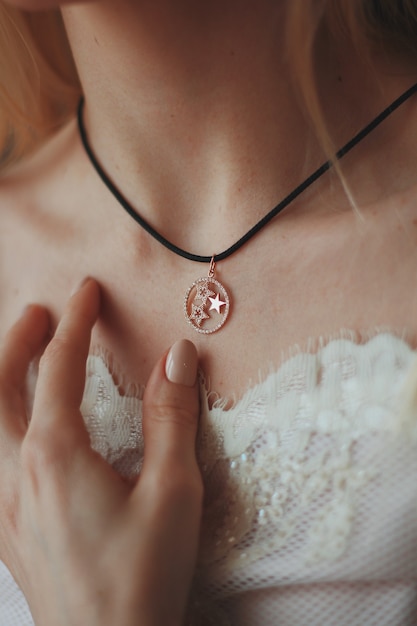
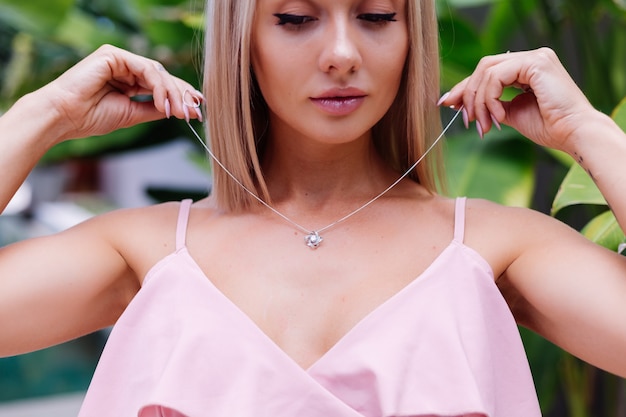
 Sterling Silver is used in a wide range of jewelry styles and price points. However, even high-end designers sometimes favor the metal for its unique color and working properties. Favored by many middle market designers because it is a high quality, lustrous material that is also affordable for most people. The metal is easy to clean with readily available silver cleaning supplies. Read our article at the left for more information on different kinds of silver metal. Sterling silver is used in a wide range of jewelry styles and sold at various price points. It can be formed, textured, cast and soldered. Halstead is known for our huge selection of sterling silver and gold filled chain. In this section, you will see headpins, bails, settings, clasps and other sub-categories. Most of the jewelry parts and raw metals we sell online at Halstead are sterling silver. Shop our huge selection of sterling silver chain and findings. Since this metal is widely used in jewelry making, it can be sourced as findings, chain and mill product in many different forms and styles. Shop our huge array of earring findings including ear wires, leverbacks, posts, threaders, jackets and hoop earrings (


 Are you searching for pearl necklaces for a new mom? Birthstone Pendant Necklace – This is for the more traditional new mom who still favors birthstones. The disc itself has a satin finish, thanks to the brushing and the letters are oxide and hand stamped to give a beautiful effect. It also will have a crystal or a small birthstone. Raised Charm necklace – The raised rim charm necklace is bound to delight any new mom! Mommy Tag – This is especially popular amongst celebrity mothers. The women of today look for new kinds of jewelry that portray pictures of their babies or their names, while still being trendy. This is a very trendy necklace for mothers and is essentially has a sterling disk pendant which can have up to 5 names engraved upon it along with the birthstones. Up to 4
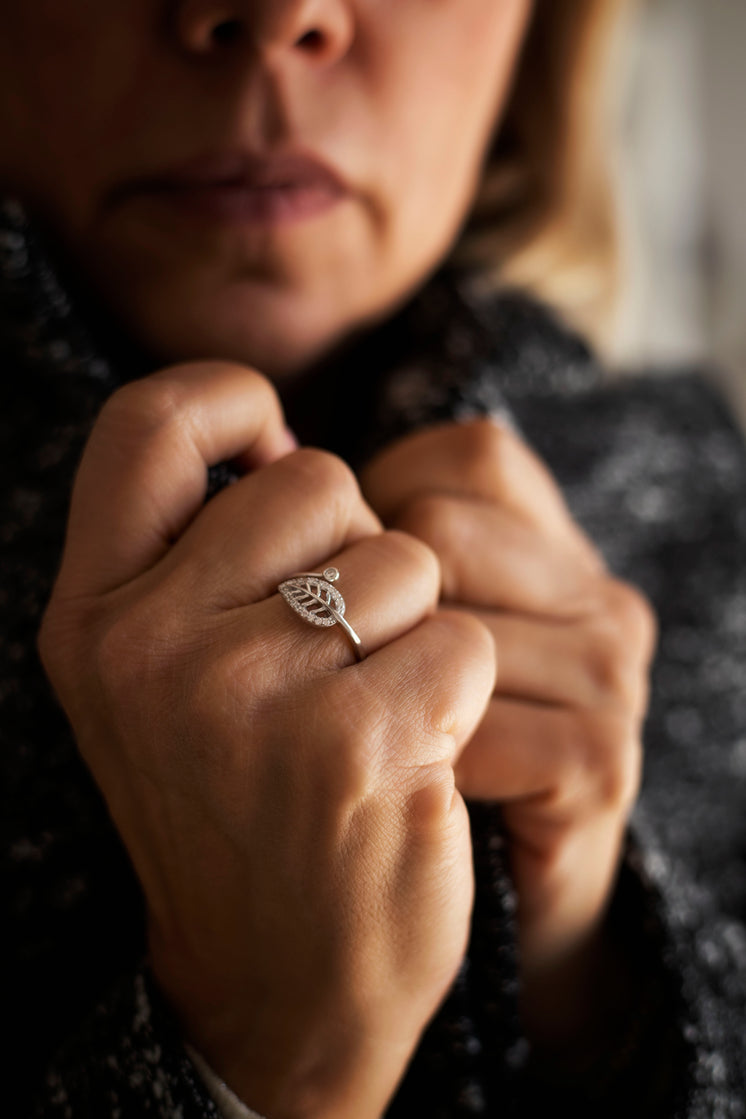 Lovingly crafted

