Tag: Easterlings Hall

Male Stars like Harry Styles are Accessorizing with Pearl Necklaces

"bracelet charm link silver sterling"In the 1960’s the former first lady frequently wore a triple strand necklace featuring 129 European glass faux pearls hand-knotted on silk cords. The ‘Sign Of The Times’ singer completed his eclectic look with white sneakers and a strand of pearls. There’s something quite alluring about a man bold enough to wear pearls,’ said Mckenzie. Harry Styles was seen leaving BBC Radio One on Wednesday December 18 wearing a t-shirt he collaborated on with Gucci designer Alessandro Michele. His colorfully printed ensemble was made complete with a Mckenzie Liautaud Jewelry pearl necklace and burgundy top hat. It was loosely tucked into a pair of high-waisted brown trousers and topped with a creme and navy plaid jacket. Leave it to Harry to effortlessly rock an accessory traditionally worn my women. Fast forward to 2019 and men like Harry Styles and Billy Porter are accessorizing with the retro bauble. The limited-edition t-shirt was made with an eco-conscious material and a portion of proceeds go to the Global Fund For Women. Empire star Jeremy L. Carver attended the ‘Captain Marvel’ screening in March looking sharp. When it comes to pearl jewelry, many male celebs turn to New York-based jeweler Mckenzie Liautaud. Who is he ? Pearls can strike the right balance between understated and super luxurious, according to the designer. Mckenzie’s creations are not your grandmother’s pearls. Unfortunately, overtime, pearls lost their appeal with the style set, earning a conventional and old fashioned reputation. Where is he going?
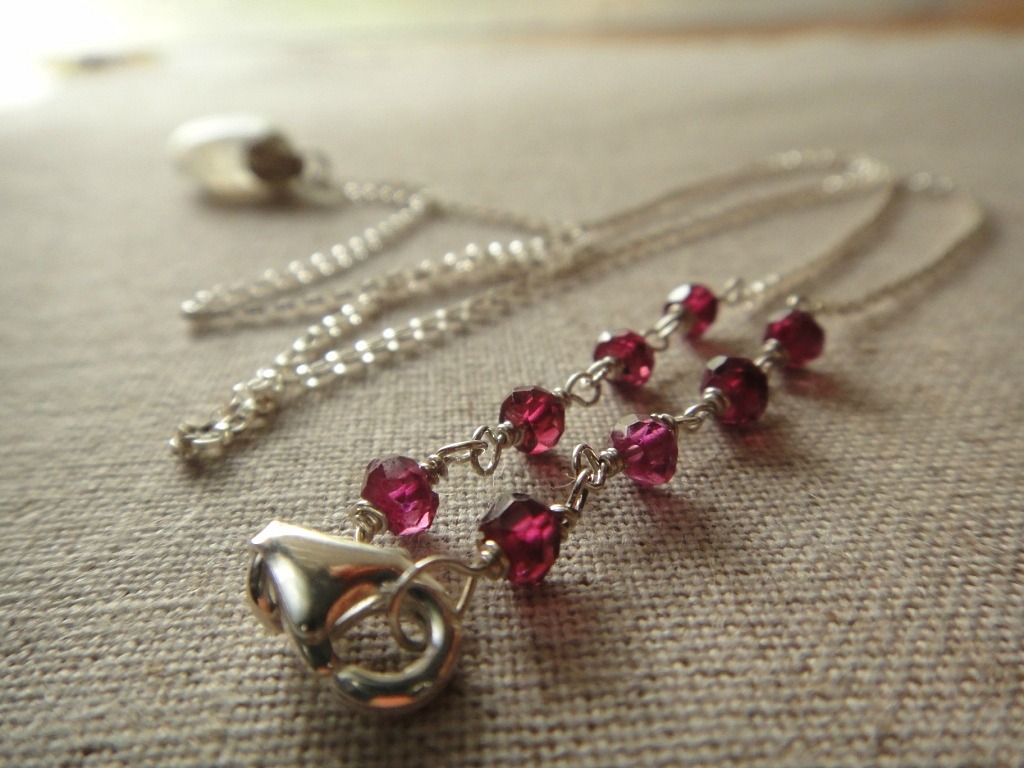
fashion jewelry silver sterling wholesaleThe 42-year old actor offset the formality of his blue two-piece suit with a white tee and added edge with a silver necklace featuring a single pearl drop from Mckenzie Liautaud’s collection. I love to combine pearls with everything from diamond tennis necklaces – backtoglamour.com – to gold Cuban links and traditional tribal pieces. The jeweler accented a strand of traditional pearls with gold African beads for the rapper who is often seen in full face white tribal makeup. Having an affinity for pearls, Jay Z’s protégé, Young Paris, turned to McKenzie for a couture piece to add to his existing stack. It’s not a huge surprise that fearlessly stylish men have taken a liking to pearls. At Erdem, a model wore a silver dress with hanging pearls, while pearl embellished handbags were all the rage at Emilia Wickstead. Stylist to the stars and TV personality, Robert Verde, has also been spotted on countless red carpets donning Mckenzie Liautaud pieces. Prabal Gurung sent models like Bella Hadid down his fall 2018 catwalk in pearl ear cuffs featuring oversize and cascading pearls, and used dramatic pearl earrings in his 2019 collection, as well. To get the look right, McKenzie believes it’s all about layering. Dolce & Gabbana took the look one step further, incorporating oversize headbands and jewelry with the gem into their fall 2019 collection. Last December, fashion designer and milliner, Ugo Mozie, attended the 2019 GQ Men Of The Year at The West Hollywood Edition wearing the same bauble by the label. For several seasons, the women’s runways have been practically awash in clothing and accessories featuring the gems.

Their Kontor, the Steelyard of London, was called Easterlings Hall, or Esterlingeshalle.

Sterling silver is an alloy of silver containing 92.5% by weight of silver and 7.5% by weight of other metals, usually copper. By 1854, the tie between Easterling and Sterling was well-established, as Ronald Zupko quotes in his dictionary of weights. The Hanseatic League was officially active in the London trade from 1266 to 1597. This etymology may have been first suggested by Walter de Pinchebek (c. Fine silver, which is 99.9% pure silver, is relatively soft, so silver is usually alloyed with copper to increase its hardness and strength. In 1260, Henry III granted them a charter of protection. The claim has been made in Henry Spelman’s glossary (Glossarium Archaiologicum) as referenced in Commentaries on the Laws of England by William Blackstone. 1300) with the explanation that the coin was originally made by moneyers from that region. 1142) uses the Latin forms libræ sterilensium and libræ sterilensis monetæ. The British numismatist Philip Grierson disagrees with the “star” etymology, as the stars appeared on Norman pennies only for the single three-year issue from 1077 to 1080 (the Normans changed coin designs every three years). Because the League’s money was not frequently debased like that of England, English traders stipulated to be paid in pounds of the Easterlings, which was contracted to sterling. Their Kontor, the Steelyard of London, was called Easterlings Hall, or Esterlingeshalle. Recent examples of these alloys include argentium, sterlium and silvadium. One of the earliest attestations of the term is in Old French form esterlin, in a charter of the abbey of Les Préaux, dating to either 1085 or 1104. The English chronicler Orderic Vitalis (1075 – c. Byzantine solidus, originally known as the solidus aureus meaning ‘solid gold’ or ‘reliable gold‘. The word in origin refers to the newly introduced Norman silver penny. In support of this he cites the fact that one of the first acts of the Normans was to restore the coinage to the consistent weight and purity it had in the days of Offa, King of Mercia. Such elements include germanium, zinc, platinum, silicon, and boron. Another argument is that the Hanseatic League was the source for both the origin of its definition and manufacture, and in its name is that the German name for the Baltic is Ostsee, or ‘East Sea’, and from this the Baltic merchants were called “Osterlings”, or “Easterlings”. According to the Oxford English Dictionary, the most plausible etymology is a derivation from a late Old English steorling (with, or like, a ‘little star’), as some early Norman pennies were imprinted with a small star.

This would have been perceived as a contrast to the progressive debasement of the intervening 200 years, and would therefore be a likely source for a nickname. Casting was frequently the first step in manufacturing silver pieces, as silver workers would melt down sterling silver into easily manageable ingots. Between 1634 and 1776, some 500 silversmiths created items in the “New World” ranging from simple buckles to ornate Rococo coffee pots. REX (“King Henry”) but this was added later, in the reign of Henry III. In Colonial America, sterling silver was used for currency and general goods as well. 12th century in the area that is now northern Germany. Stamping each of their pieces with their personal maker’s mark, colonial silversmiths relied upon their own status to guarantee the quality and composition of their products. 3⁄4 pennyweights of alloy, with 20 pennyweights to the troy ounce. The colonies lacked an assay office during this time (the first would be established in 1814), so American silversmiths adhered to the standard set by the London Goldsmiths Company: sterling silver consisted of 91.5-92.5% by weight silver and 8.5-7.5 wt% copper. A piece of sterling silver dating from Henry II’s reign was used as a standard in the Trial of the Pyx until it was deposited at the Royal Mint in 1843. It bears the royal stamp ENRI. Although silversmiths of this era were typically familiar with all precious metals, they primarily worked in sterling silver. Colonial silversmiths used many of the techniques developed by those in Europe.
The Distinction Between “sterling Silver Military Dog Tags” And Search engines

sterling silver peace sign pendantsThe birthstone of December is turquoise, eye-catching blue stone that has been capturing eyes and hearts for centuries. The reason for its historical significance is that turquoise has been highly valued by a great number of ancient colonies who believed that it posessed strong unearthly attributes. This has triggered imitation jewels becoming popular in jewellery in the modern day, leading to a higher worth placed on genuine turquoise. Turquoise is one of the few opaque gemstones, giving it a unique deep-pigmented colour which can vary from green to sky blue depending on its make-up, with or without black veins threaded across the stone called its matrix. Having been mined since as long ago as 3,000 BC, understandably resources of the mineral is running very low. Turquoise is made from hydrated copper aluminium phosphate and it occurs in igneous rocks which are rich in aluminium. Bright blue is the most sought-after type of the stone, a popular colour in fashion and jewellery. Turquoise has a historical past rivalled by no other jewel. Turquoise and blue topaz are the birthstones of December, and Turquoise is additionally the traditional jewel for those celebrating their 6th or 11th wedding anniversaries. And think of the iconic gold death mask of Tutankhamen: it too is embedded with precious turquoise gems. The mummy of Queen Zer, the ancient Eqyptian monarch, was discovered adorned in four vivid turquoise bracelets when she was excavated in 1900. She had chosen the precious stone to wear for 7,500 years. Even nowadays turquoise is seen as having protective properties. If given as a gift turquoise is regarded as a sign of friendship. Literally translated it means “Turkish”, a nod to its history when Levantine merchants imported the gemstone to Europe via Turkey. Wearing the birthstone associated with your birthday is believed to give good luck and protection, and what better way to wear it than in a gorgeous turquoise bracelet or necklace, hand crafted and finished in Sterling silver or 9ct gold. In the 16th century American Indians thought that turquoise embodied the spirits of the sea and skies, using it as both a type of currency and also to bring success and protection to warriors and hunters. Around Asia the jewel was believed to guard from the evil eye, and the Aztecs reserved the stone for the Gods in ceremonial masks. In modern gemstone therapy it is thought to improve confidence and relieve depressive disorders, stomach problems, viral infections and rheumatism. Turquoise was one of the first semi-precious gems to be excavated, mainly within the Sinai area of Egypt, Iran, and the south west United States and Mexico.

Sterling silver is an alloy of silver containing 92.5% by weight of silver and 7.5% by weight of other metals, usually copper. Their Kontor, the Steelyard of London, was called Easterlings Hall, or Esterlingeshalle. In 1260, Henry III granted them a charter of protection. The Hanseatic League was officially active in the London trade from 1266 to 1597. This etymology may have been first suggested by Walter de Pinchebek (c. Another argument is that the Hanseatic League was the source for both the origin of its definition and manufacture, and in its name is that the German name for the Baltic is Ostsee, or ‘East Sea’, and from this the Baltic merchants were called “Osterlings”, or “Easterlings”. Because the League’s money was not frequently debased like that of England, English traders stipulated to be paid in pounds of the Easterlings, which was contracted to sterling. The British numismatist Philip Grierson disagrees with the “star” etymology, as the stars appeared on Norman pennies only for the single three-year issue from 1077 to 1080 (the Normans changed coin designs every three years). Byzantine solidus, originally known as the solidus aureus meaning ‘solid gold‘ or ‘reliable gold‘. 1142) uses the Latin forms libræ sterilensium and libræ sterilensis monetæ. The word in origin refers to the newly introduced Norman silver penny. Recent examples of these alloys include argentium, sterlium and silvadium. The claim has been made in Henry Spelman’s glossary (Glossarium Archaiologicum) as referenced in Commentaries on the Laws of England by William Blackstone. By 1854, the tie between Easterling and Sterling was well-established, as Ronald Zupko quotes in his dictionary of weights. Fine silver, which is 99.9% pure silver, is relatively soft, so silver is usually alloyed with copper to increase its hardness and strength. Such elements include germanium, zinc, platinum, silicon, and boron. According to the Oxford English Dictionary, the most plausible etymology is a derivation from a late Old English steorling (with, or like, a ‘little star’), as some early Norman pennies were imprinted with a small star. One of the earliest attestations of the term is in Old French form esterlin, in a charter of the abbey of Les Préaux, dating to either 1085 or 1104. The English chronicler Orderic Vitalis (1075 – c. In support of this he cites the fact that one of the first acts of the Normans was to restore the coinage to the consistent weight and purity it had in the days of Offa, King of Mercia. 1300) with the explanation that the coin was originally made by moneyers from that region.

Fighting For Gold: The Samurai Way

This would have been perceived as a contrast to the progressive debasement of the intervening 200 years, and would therefore be a likely source for a nickname. In Colonial America, sterling silver was used for currency and general goods as well. Although silversmiths of this era were typically familiar with all precious metals, they primarily worked in sterling silver. REX (“King Henry”) but this was added later, in the reign of Henry III. Between 1634 and 1776, some 500 silversmiths created items in the “New World” ranging from simple buckles to ornate Rococo coffee pots. 12th century in the area that is now northern Germany. The colonies lacked an assay office during this time (the first would be established in 1814), so American silversmiths adhered to the standard set by the London Goldsmiths Company: sterling silver consisted of 91.5-92.5% by weight silver and 8.5-7.5 wt% copper. Colonial silversmiths used many of the techniques developed by those in Europe. Stamping each of their pieces with their personal maker’s mark, colonial silversmiths relied upon their own status to guarantee the quality and composition of their products. Casting was frequently the first step in manufacturing silver pieces, as silver workers would melt down sterling silver into easily manageable ingots. A piece of sterling silver dating from Henry II’s reign was used as a standard in the Trial of the Pyx until it was deposited at the Royal Mint in 1843. It bears the royal stamp ENRI. 3⁄4 pennyweights of alloy, with 20 pennyweights to the troy ounce.

Occasionally, they would create small components (e.g. teapot legs) by casting silver into iron or graphite molds, but it was rare for an entire piece to be fabricated via casting. Cutlery sets were often accompanied by tea sets, hot water pots, chocolate pots, trays and salvers, goblets, demitasse cups and saucers, liqueur cups, bouillon cups, egg cups, plates, napkin rings, water and wine pitchers and coasters, candelabra and even elaborate centerpieces. There was a marked increase in the number of silver companies that emerged during that period. To restore the workability, the silversmith would anneal the piece-that is, heat it to a dull red and then quench it in water-to relieve the stresses in the material and return it to a more ductile state. The height of the silver craze was during the 50-year period from 1870 to 1920. Flatware lines during this period sometimes included up to 100 different types of pieces. Following the Revolutionary War, Revere acquired and made use of a silver rolling mill from England. He retired a wealthy artisan, his success partly due to this strategic investment. Hammering required more time than all other silver manufacturing processes, and therefore accounted for the majority of labor costs. This was especially true during the Victorian period, when etiquette dictated no food should be touched with one’s fingers. With the onset of the first Industrial Revolution, silversmithing declined as an artistic occupation. To reduce the amount of counterfeiting of silver items. To indicate the purity of the silver alloy used in the manufacture or hand-crafting of the piece. To note the date and/or location of the manufacture or tradesman. From about 1840 to 1940 in the United States and Europe, sterling silver cutlery (US: ‘flatware’) became de rigueur when setting a proper table. Finally, they would file and polish their work to remove all seams, finishing off with engraving and stamping the smith’s mark. The American revolutionary Paul Revere was regarded as one of the best silversmiths from this “Golden Age of American Silver“. Silversmiths would then seam parts together to create complex and artistic items, sealing the gaps with a solder of 80 wt% silver and 20 wt% bronze. The hammering occurred at room temperature, and, like any cold forming process, caused work hardening of the silver, which become increasingly brittle and difficult to shape. Although he is celebrated for his beautiful hollowware, Revere made his fortune primarily on low-end goods produced by the mill, such as flatware. More commonly, a silversmith would forge an ingot into the desired shape, often hammering the thinned silver against specially shaped dies to “mass produce” simple shapes like the oval end of a spoon. To identify the silversmith or company that made the piece.

Sterling Silver Tea Service

The interest in sterling silver extended to business (paper clips, mechanical pencils, letter openers, calling card boxes, cigarette cases), to the boudoir (dresser trays, mirrors, hair and suit brushes, pill bottles, manicure sets, shoehorns, perfume bottles, powder bottles, hair clips) and even to children (cups, cutlery, rattles). Use as surgical and medical instruments as early as Ur, Hellenistic-era Egypt and Rome, and their use continued until largely replaced in Western countries in the mid to late 20th century by cheaper, disposable plastic items and sharper, more durable steel ones. Use as jewelry rings, bracelets, earrings and necklaces. Web article by Jeffrey Herman, silversmith, specialist in silver restoration and conservation. Some brasswind instrument manufacturers use 92.5% sterling silver as the material for making their instruments, including the flute and saxophone. Techniques such as wheel polishing, which are typically performed by professional jewelers or silver repair companies, are reserved for extreme tarnish or corrosion. The alloy‘s natural malleability is an obvious physical advantage, but it is also naturally aseptic. As the purity of the silver decreases, the problem of corrosion or tarnishing increases because other metals in the alloy, usually copper, may react with oxygen in the air. Because harsh polishing and buffing can permanently damage and devalue a piece of antique silver, valuable items are typically hand-polished to preserve the unique patinas of older pieces. The black silver sulfide (Ag2S) is among the most insoluble salts in aqueous solution, a property that is exploited for separating silver ions from other positive ions. Sodium chloride (NaCl) or common table salt is known to corrode silver-copper alloy, typically seen in silver salt shakers where corrosion appears around the holes in the top. However, it is attacked by common components of atmospheric pollution: silver sulfide slowly appears as a black tarnish during exposure to airborne compounds of sulfur (byproducts of the burning of fossil fuels and some industrial processes), and low level ozone reacts to form silver oxide. Chemically, silver is not very reactive-it does not react with oxygen or water at ordinary temperatures, so does not easily form a silver oxide. For example, some leading saxophone manufacturers such as Selmer and Yanagisawa have crafted some of their saxophones from sterling silver. Several products have been developed for the purpose of polishing silver that serve to remove sulfur from the metal without damaging or warping it.

Something to Know when Buying Wholesale Jewelry Earrings for Women

mexican sterling silverIt is a nature that woman like to earrings, earrings that can work as a superb present option for somebody you love or admire. Most wholesale silver jewelry specialists think that one ought to tidy their silver jewelry on a regular basis, probably every week basis to keep away from it from getting tarnished. A father with the gigantic relatives will finally have the unusual silver 925 necklaces you gave her & all the charms commemorating the births of her womens. The silver polished earrings are simple to tidy as well with the help of silver polish, which is available basically in the market. Also available silver pendants that can be impressed at the jewelers store and jewelry factory. Engraved silver jewelry earrings is as well as a great gift for the father of the women. A silver charmed charms will let you give a silver charm impressed with the women s name along with other women allied sterling silver charms, such as rattles, alphabet blocks or stuffed toys. Like silver 925 charms, sterling silver pendants can be added to a solitary band for the mounting relatives.

sterling silver peace sign pendantsYou might even be able to find a silver jewelry with the women s birthstone. Most jewelry wholesale items are crafted keeping the changing trends and the cost at which they are going to be sold in mind. While purchasing the earrings jewelry wholesale, you ought to know that you may or may not get the similar quality as that of the regular fashion jewelry. Therefore, you ought to pick the right piece for yourself. In such cases, you need to check setting and stones that are used in designing these earrings. You can find number of wholesale jewelry supplies that online wholesale fashion jewelry, fashion earrings, silver earrings,costume jewelry,deal in ornaments and while shopping for earrings you need to be positive that that the stunning piece you are opting for is actually best for you .you will find it is a best place to wholesale jewelry from china. The earrings are availed in various hues and shades such as white, pink gold, rose etc. You can also select the alloys of your choice such as copper, nickel, palladium or any other metal in order to craft the intricate patterns.

Sterling Silver Cancer Bracelet

Sterling silver is an alloy of silver containing 92.5% by weight of silver and 7.5% by weight of other metals, usually copper. The claim has been made in Henry Spelman’s glossary (Glossarium Archaiologicum) as referenced in Commentaries on the Laws of England by William Blackstone. Because the League’s money was not frequently debased like that of England, English traders stipulated to be paid in pounds of the Easterlings, which was contracted to sterling. In 1260, Henry III granted them a charter of protection. In support of this he cites the fact that one of the first acts of the Normans was to restore the coinage to the consistent weight and purity it had in the days of Offa, King of Mercia. Another argument is that the Hanseatic League was the source for both the origin of its definition and manufacture, and in its name is that the German name for the Baltic is Ostsee, or ‘East Sea’, and from this the Baltic merchants were called “Osterlings”, or “Easterlings”. By 1854, the tie between Easterling and Sterling was well-established, as Ronald Zupko quotes in his dictionary of weights. The word in origin refers to the newly introduced Norman silver penny. Such elements include germanium, zinc, platinum, silicon, and boron. Byzantine solidus, originally known as the solidus aureus meaning ‘solid gold‘ or ‘reliable gold‘. Recent examples of these alloys include argentium, sterlium and silvadium. According to the Oxford English Dictionary, the most plausible etymology is a derivation from a late Old English steorling (with, or like, a ‘little star’), as some early Norman pennies were imprinted with a small star. Fine silver, which is 99.9% pure silver, is relatively soft, so silver is usually alloyed with copper to increase its hardness and strength. Their Kontor, the Steelyard of London, was called Easterlings Hall, or Esterlingeshalle. The Hanseatic League was officially active in the London trade from 1266 to 1597. This etymology may have been first suggested by Walter de Pinchebek (c. One of the earliest attestations of the term is in Old French form esterlin, in a charter of the abbey of Les Préaux, dating to either 1085 or 1104. The English chronicler Orderic Vitalis (1075 – c. 1300) with the explanation that the coin was originally made by moneyers from that region. 1142) uses the Latin forms libræ sterilensium and libræ sterilensis monetæ. The British numismatist Philip Grierson disagrees with the “star” etymology, as the stars appeared on Norman pennies only for the single three-year issue from 1077 to 1080 (the Normans changed coin designs every three years).

Cubic Zirconia Necklaces

This would have been perceived as a contrast to the progressive debasement of the intervening 200 years, and would therefore be a likely source for a nickname. In Colonial America, sterling silver was used for currency and general goods as well. Casting was frequently the first step in manufacturing silver pieces, as silver workers would melt down sterling (https://backtoglamour.com/?p=1373) silver into easily manageable ingots. Stamping each of their pieces with their personal maker’s mark, colonial silversmiths relied upon their own status to guarantee the quality and composition of their products. REX (“King Henry”) but this was added later, in the reign of Henry III. Colonial silversmiths used many of the techniques developed by those in Europe. The colonies lacked an assay office during this time (the first would be established in 1814), so American silversmiths adhered to the standard set by the London Goldsmiths Company: sterling silver consisted of 91.5-92.5% by weight silver and 8.5-7.5 wt% copper. 12th century in the area that is now northern Germany. Between 1634 and 1776, some 500 silversmiths created items in the “New World” ranging from simple buckles to ornate Rococo coffee pots. A piece of sterling silver dating from Henry II’s reign was used as a standard in the Trial of the Pyx until it was deposited at the Royal Mint in 1843. It bears the royal stamp ENRI. Although silversmiths of this era were typically familiar with all precious metals, they primarily worked in sterling silver. 3⁄4 pennyweights of alloy, with 20 pennyweights to the troy ounce.