Tag: Easterlings Hall

5 Tips for Buying Silver Jewelry Online

Authentic handcrafted silver jewelry is every bit as stunning as it is often unique. 3. Calculate very carefully. It may go without saying, but try not to mistake commercially created jewelry together with hand made silver jewelry. Simply because custom-made items typically aren’t returnable, it is critical to be sure that the hand made silver jewelry you purchase is going to fit. The second is created by artists whom take tremendous satisfaction in their labor. 1. Locate a dependable website. There’s no need to accept “practically good enough.” Rather, you can find the actual piece you might have frequently dreamed about, in precisely the correct size. Whenever jewelry is handcrafted, it may be personalized in different number of ways, through lengths of chains around the varieties of precious gems utilized in pendants, necklaces and rings. It can be beneficial to choose a business which has been operating for many years, which has been promoting on the internet with reputable companies. For your extraordinary shopping experience, no matter where you but jewelry adhere to these five tips for buying silver jewelry online as advised by Jewelry Clearwater. Regardless if you are searching for items to increase your own collection as well as looking to buy gifts, you will find exceptional internet resources to get hand crafted earrings, pendants, rings, brochette, and necklaces. 2. Clearwater Jewelry recommends that you take full advantage of personalization.

99.9 percent pure silver.
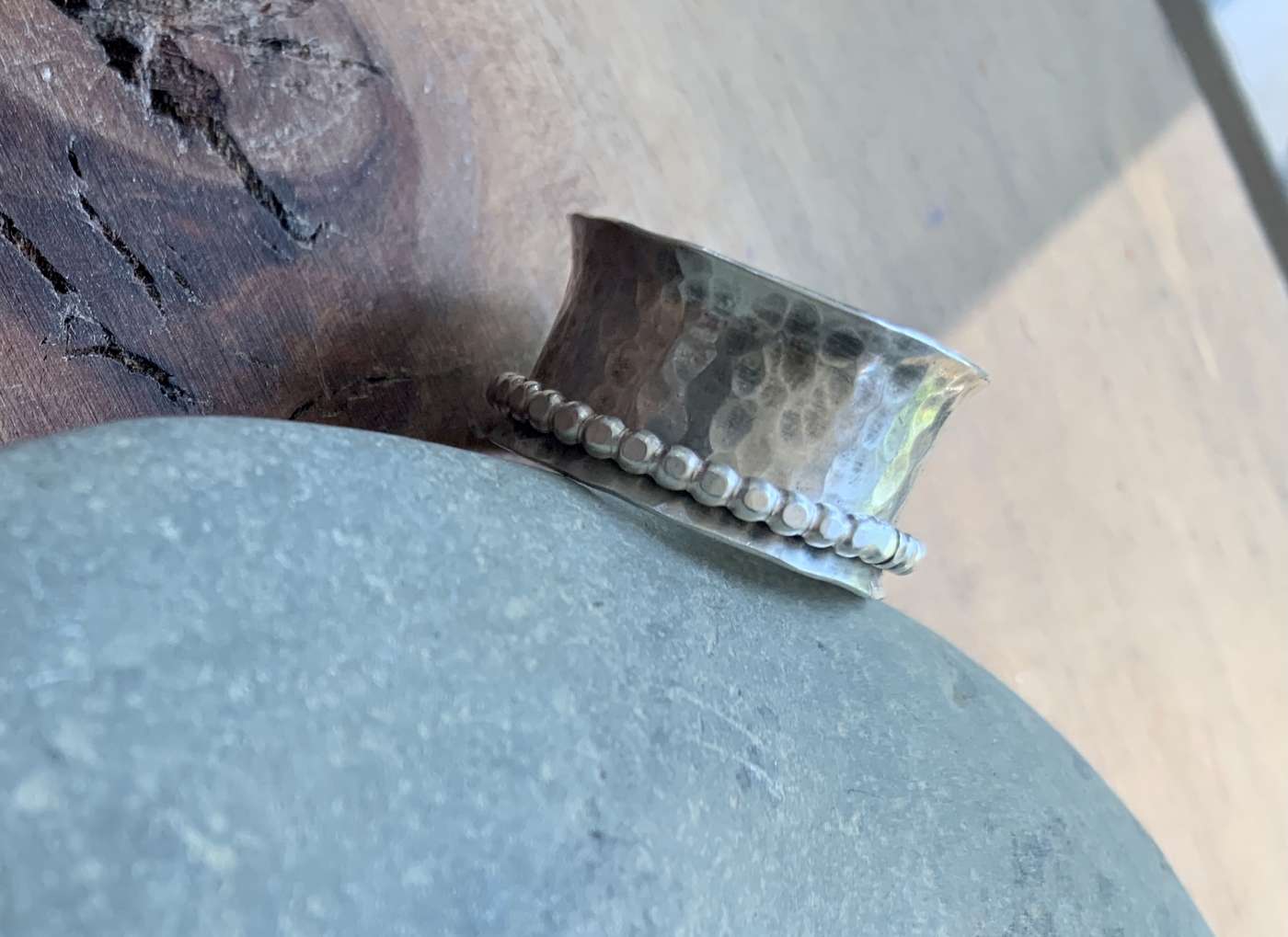
"sterling silver spinner rings"It takes merely a couple of minutes to obtain a perfect measurement, and doing this will guarantee that this bracelet or engagement ring you purchase is going to be precisely what you desire. You needn’t be alarmed, nonetheless, in the event the stones happen to be heated or irradiated to heighten or transform their colors. You may also make use of string to measure for bracelets, necklace, or anklet lengths. The most effective internet jewelry websites include a large choice of information about jewelry. 5. Purchase the genuine article. Be sure that the internet supplier you choose utilizes either sterling silver .925 or 92.5 percent silver or fine silver 99.9 percent pure silver. 4. Jewelry in Clearwater recommends that you to always perform a precious stone study. Likewise, you might realize that pearls are fragile and may easily take in liquids; however, you may not realize that turquoise is also porous and will very easily become stained. Trustworthy merchants will readily share these details. Organically colored rubies, sapphires, and topaz, for instance, are extremely rare; it is deemed an approved process within the jewelry business to improve gemstone colors. In case you are in between sizes, be certain to opt for the greater size. Jewelry Clearwater suggest that when investing in hand made silver jewelry, you aren’t simply investing in a piece you may treasure, but one that will be likely to turn out to be an heirloom for our children and grandchildren. When you’re planning to purchase jewelry along with precious gems, it can also be essential to understand if the stones are natural or in the event their colors happen to be enhanced. Prior to ordering, learn about the jewels you’re thinking about. Jewelry in Clearwater suggest that you use this method to determine ring size, request a friend to take a bit of string, place it around the knuckle as well as bigger section of your finger, and mark the string. To ascertain the size, hold the string against a measuring tape and check your current measurement to the website’s sizing chart. It is advisable to understand, for instance, that aquamarine may be cleaned with dishwashing soap, but in fact ultrasonic and steam cleaning may damage the stone. Silver jewelry is beautiful, although only when it’s genuine silver.

Sterling silver is an alloy of silver containing 92.5% by weight of silver and 7.5% by weight of other metals, usually copper. The British numismatist Philip Grierson disagrees with the “star” etymology, as the stars appeared on Norman pennies only for the single three-year issue from 1077 to 1080 (the Normans changed coin designs every three years). Byzantine solidus, originally known as the solidus aureus meaning ‘solid gold’ or ‘reliable gold’. One of the earliest attestations of the term is in Old French form esterlin, in a charter of the abbey of Les Préaux, dating to either 1085 or 1104. The English chronicler Orderic Vitalis (1075 – c. Their Kontor, the Steelyard of London, was called Easterlings Hall, or Esterlingeshalle. The Hanseatic League was officially active in the London trade from 1266 to 1597. This etymology may have been first suggested by Walter de Pinchebek (c. In support of this he cites the fact that one of the first acts of the Normans was to restore the coinage to the consistent weight and purity it had in the days of Offa, King of Mercia. According to the Oxford English Dictionary, the most plausible etymology is a derivation from a late Old English steorling (with, or like, a ‘little star’), as some early Norman pennies were imprinted with a small star. The claim has been made in Henry Spelman’s glossary (Glossarium Archaiologicum) as referenced in Commentaries on the Laws of England by William Blackstone. Recent examples of these alloys include argentium, sterlium and silvadium. Such elements include germanium, zinc, platinum, silicon, and boron. Because the League’s money was not frequently debased like that of England, English traders stipulated to be paid in pounds of the Easterlings, which was contracted to sterling. In 1260, Henry III granted them a charter of protection. By 1854, the tie between Easterling and Sterling was well-established, as Ronald Zupko quotes in his dictionary of weights. 1142) uses the Latin forms libræ sterilensium and libræ sterilensis monetæ. The word in origin refers to the newly introduced Norman silver penny. Fine silver, which is 99.9% pure silver, is relatively soft, so silver is usually alloyed with copper to increase its hardness and strength. 1300) with the explanation that the coin was originally made by moneyers from that region. Another argument is that the Hanseatic League was the source for both the origin of its definition and manufacture, and in its name is that the German name for the Baltic is Ostsee, or ‘East Sea’, and from this the Baltic merchants were called “Osterlings”, or “Easterlings”.

This would have been perceived as a contrast to the progressive debasement of the intervening 200 years, and would therefore be a likely source for a nickname. 3⁄4 pennyweights of alloy, with 20 pennyweights to the troy ounce. In Colonial America, sterling silver was used for currency and general goods as well. 12th century in the area that is now northern Germany. Although silversmiths of this era were typically familiar with all precious metals, they primarily worked in sterling silver. REX (“King Henry”) but this was added later, in the reign of Henry III. A piece of sterling silver dating from Henry II’s reign was used as a standard in the Trial of the Pyx until it was deposited at the Royal Mint in 1843. It bears the royal stamp ENRI. The colonies lacked an assay office during this time (the first would be established in 1814), so American silversmiths adhered to the standard set by the London Goldsmiths Company: sterling silver consisted of 91.5-92.5% by weight silver and 8.5-7.5 wt% copper. Colonial silversmiths used many of the techniques developed by those in Europe. Casting was frequently the first step in manufacturing silver pieces, as silver workers would melt down sterling silver into easily manageable ingots. Between 1634 and 1776, some 500 silversmiths created items in the “New World” ranging from simple buckles to ornate Rococo coffee pots. Stamping each of their pieces with their personal maker’s mark, colonial silversmiths relied upon their own status to guarantee the quality and composition of their products.

Necklaces are Jewelrysaga’s most Popular Category

sterling and silver and jewelryAre you planning a gift of jewelry for your belove girl or boy? The holidays mean so much too so many. Whether it’s for yourself or for someone you love, build in time to get a good background on the subject. The holidays are a time for all to reflect on the year that has so quickly gone by and most importantly, it allows us to show our appreciation to the ones we love by giving them a special gift. If you decide to order online, check on the reputation of the store with the Better Business Bureau or your local attorney general’s office. It means good-eating, cozy decorations, happy children and spending quality time with family and friends. Before you buy from a local jeweler, check prices online to find out what range is normal for the piece you’re looking at. If you’re auction shopping for fashion jewelry, get familiar with the safeguards to know before you by at an online auction. Learning more about jewelry is a fascinating subject even if you’re not in the market right now and the more you know, the happier you’ll be when it comes time to make a big purchase.

The more research you do before you make the purchase, the happier you’ll be afterwards. Make sure you know how a particular scale and grade represents the color of the diamond you’re considering. Ordering online? Keep printouts of the web pages and any receipts – including email messages – anything that has details about the transaction, including prices, refund information and return policies. Shopping for earrings is probably the most difficult of all jewelry purchases. Finding the perfect ring at the perfect price can be a daunting task, but don’t worry. A pair of earrings can change a woman’s look completely. Here are some tips to help you out. Honestly, you may misinterpret what is being said. Ask your salesperson to write down any information about the fashion jewelry. If you save these on your computer – make a backup copy on a disk! This is one stone that you should always make sure to purchase from a jeweler you trust. It marks a huge turning point in your life, and carries a lot of meaning and symbolism. When you’re buying a diamond, look for the famous 4 C’s: cut, color, clarity and carats (weight). If you’re not satisfied, you’ll need all of these to return your purchase. If you see it in writing you’ll be clearer and you also have documentation to back you up if there is a problem later. Even then, getting a certificate and having the stone appraised by another jeweler is a good idea. It can be done. Buying an engagement fashion ring is a major decision. A diamond can be described as “flawless” only if it has no visible surface cracks or other imperfections when viewed under 10-power magnification by a skilled diamond grader. Each of these will affect the price. Any assurances that are not in writing are open to question. A “D” may be the best color for one scale, but not for another. Color is sometimes “graded” on a scale, but not every scale is identical. It can even change the shape of a woman’s face.

You also want to look for earring posts that are lead free.

"sterling silver wire"Hoop earrings, oval shaped earrings and oversized earrings can round off a woman’s face. Cross necklaces and other religious pendant necklaces can express our faith and devotion. Jewelry truly understands the importance of a necklace. There are many types of costume jewelry necklaces to shop for and there are certain things to look out for in making sure that you are purchasing a higher quality piece. 1 inch to your measurement to allow for needed room. If this is a common problem, you should make sure earring posts are crafted from sterling silver. Many of us aren’t quite sure what size bracelet will fit our wrists, especially when shopping for sterling silver and costume jewelry bracelets online. Necklaces with sayings, horn necklaces and heart pendant necklaces can show off our sexy side. Chandelier earrings and colorful CZ earrings can bring a much needed brightness to our favorite black cocktail evening dress. Make sure to add ? So, if you’re looking for a complimenting necklace for a low-cut shirt or dress, you can pick one that is longer than 18 inches or if you are looking for a pendant necklace to sit properly with a high-cut shirt, blouse or dress you can search for a 16 inch choker necklace or 18 inch collar bone necklace. As a general rule, earrings less than 20 grams are pretty average and can be worn comfortably. Learn more about storing sterling silver and costume jewelry. Necklaces are jewelrysaga’s most popular category. With costume jewelry bracelets being so affordable, you can pick up all different styles and colors to pair with your outfits everyday of the week. You also want to look for earring posts that are lead free. However, you can simply measure your wrist with a string, mark it and then lay it next to a ruler or use a garment measuring tape in inches, since most bracelets sizes are shown in inches. All of Jewelrysaga’s necklaces offer detailed descriptions, including the length and type of closure. A linked watch can be adjusted easily by a local jeweler but bracelets often cannot. Another issue is sensitivity and allergic reactions to metal earring posts. Pearl studs and pearl dangling earrings can offer a sense of sophistication and confidence with a power suit! When shopping for faux gemstones and bead necklaces, you want to make sure that you avoid those that are crafted with plastic. Keep the beauty of your sterling silver bracelets and costume jewelry bracelets by storing them properly (our favorite- zip locks!) and keeping them away from any type of moisture from cosmetics to water and perspiration. The length of a necklace is just as important. We choose a style of earrings to work with our attire. One issue many of us have is the weight of a pair of earrings. Many of us wear a sterling silver necklace or costume pendant necklace as a way to express our personalities and to also enhance our look. Titanium posts are also a good option in avoiding allergic reactions. Sterling silver stud earrings may be the most glitz we can wear for a day at the office. It is uncomfortable for many to wear a pair of earrings that are heavy in weight.

Sterling silver is an alloy of silver containing 92.5% by weight of silver and 7.5% by weight of other metals, usually copper. In support of this he cites the fact that one of the first acts of the Normans was to restore the coinage to the consistent weight and purity it had in the days of Offa, King of Mercia. According to the Oxford English Dictionary, the most plausible etymology is a derivation from a late Old English steorling (with, or like, a ‘little star’), as some early Norman pennies were imprinted with a small star. The British numismatist Philip Grierson disagrees with the “star” etymology, as the stars appeared on Norman pennies only for the single three-year issue from 1077 to 1080 (the Normans changed coin designs every three years). Their Kontor, the Steelyard of London, was called Easterlings Hall, or Esterlingeshalle. The claim has been made in Henry Spelman’s glossary (Glossarium Archaiologicum) as referenced in Commentaries on the Laws of England by William Blackstone. Fine silver, which is 99.9% pure silver, is relatively soft, so silver is usually alloyed with copper to increase its hardness and strength. In 1260, Henry III granted them a charter of protection. One of the earliest attestations of the term is in Old French form esterlin, in a charter of the abbey of Les Préaux, dating to either 1085 or 1104. The English chronicler Orderic Vitalis (1075 – c. The word in origin refers to the newly introduced Norman silver penny. Byzantine solidus, originally known as the solidus aureus meaning ‘solid gold’ or ‘reliable gold’. 1300) with the explanation that the coin was originally made by moneyers from that region. By 1854, the tie between Easterling and Sterling was well-established, as Ronald Zupko quotes in his dictionary of weights. 1142) uses the Latin forms libræ sterilensium and libræ sterilensis monetæ. Because the League’s money was not frequently debased like that of England, English traders stipulated to be paid in pounds of the Easterlings, which was contracted to sterling. Another argument is that the Hanseatic League was the source for both the origin of its definition and manufacture, and in its name is that the German name for the Baltic is Ostsee, or ‘East Sea’, and from this the Baltic merchants were called “Osterlings”, or “Easterlings”. Recent examples of these alloys include argentium, sterlium and silvadium. Such elements include germanium, zinc, platinum, silicon, and boron. The Hanseatic League was officially active in the London trade from 1266 to 1597. This etymology may have been first suggested by Walter de Pinchebek (c.

REX (“King Henry”) but this was added later, in the reign of Henry III.

This would have been perceived as a contrast to the progressive debasement of the intervening 200 years, and would therefore be a likely source for a nickname. In Colonial America, sterling silver was used for currency and general goods as well. Between 1634 and 1776, some 500 silversmiths created items in the “New World” ranging from simple buckles to ornate Rococo coffee pots. 3⁄4 pennyweights of alloy, with 20 pennyweights to the troy ounce. Although silversmiths of this era were typically familiar with all precious metals, they primarily worked in sterling silver. Stamping each of their pieces with their personal maker’s mark, colonial silversmiths relied upon their own status to guarantee the quality and composition of their products. REX (“King Henry”) but this was added later, in the reign of Henry III. 12th century in the area that is now northern Germany. A piece of sterling silver dating from Henry II’s reign was used as a standard in the Trial of the Pyx until it was deposited at the Royal Mint in 1843. It bears the royal stamp ENRI. Casting was frequently the first step in manufacturing silver – www.selfridges.com – pieces, as silver workers would melt down sterling silver into easily manageable ingots. Colonial silversmiths used many of the techniques developed by those in Europe. The colonies lacked an assay office during this time (the first would be established in 1814), so American silversmiths adhered to the standard set by the London Goldsmiths Company: sterling silver consisted of 91.5-92.5% by weight silver and 8.5-7.5 wt% copper.
To Keep your Gold Items Bright

"sterling silver biker rings"Whether you make fashion jewelry or fine jewelry, showing off your designs in their best light means investing in proper jewelry care. What is helpful in cleaning one material may even cause damage to another. In general, sterling silver is relatively soft compared to other metals, so it needs to be cleaned with a delicate touch to avoid leaving scratches behind. Cleaning silver is as simple as using a mild, sulfate-free dish detergent mixed into a small dish of warm water. There are many substances that can cause silver to corrode over time, including household chemicals, lotions, perfumes, chlorine, and hairspray, so take care to keep your sterling silver pieces away from these chemicals as much as you can. For silver jewelry care, we recommend using a cotton or flannel cloth to gently rub away any marks or residue. Your customers will notice if your pieces seem dim, dusty, or lackluster. While there are a few common rules when it comes to keeping your jewelry bright and sparkling, there is no one size fits all solution, as different materials will require different methods for maintaining shine. To keep your gold items bright, add a little bit of mild, sulfate-free dish detergent to a bowl of warm water. Unlike silver, gold doesn’t tarnish, making it a wonderful material for jewelry makers and buyers alike-and it also makes gold jewelry care more straightforward. After you remove your piece from the bowl, dry it thoroughly with a polishing cloth. If you do choose to work with a toothbrush, we prefer a baby’s toothbrush as it will not scratch the surface. And, if you have many people shopping your pieces, chances are that fingers will leave behind fingerprints and oils that will affect the appearance of your designs. If you have been in contact with any of these substances and plan on working with sterling silver, be sure to thoroughly wash and dry your hands. Simple, back-and-forth strokes along the silver‘s grain are preferred over rubbing or circular strokes, as going with the grain will minimize the opportunity for scratches. Silver jewelry, in particular, is subject to tarnish when exposed to air, so keeping your silver pieces in a plastic bag or lidded box is a wonderful and easy way to prolong its shine. However, gold can be dulled by the oils from our skin, especially if your pieces are being handled frequently in a shop or a trade show. In order to keep your inventory as beautiful as possible, you’re going to need to have a regular cleaning routine, along with smart and safe storage solutions. You can let your item sit in the bowl for a few minutes before attempting to gently scrub it with a soft cotton cloth, or even a very soft toothbrush.

Luckily, jewelry care for diamonds is relatively simple.

sterling silver jewelry boxRhodium-plated jewelry can be a little susceptible to cleaning agents compared to gold or silver. While one of the most valued properties of diamonds and precious stones is that they are incredibly hard and sturdy, that does not mean they don’t need to be cleaned often and handled with care. Brass jewelry can undergo tarnish and wear, but luckily there are a lot of simple, natural, and affordable jewelry care options for brass items. Add the juice of one lemon to a cup of warm water, along with a tablespoon of salt. Rings are particularly susceptible to tarnish, as pieces worn on the hands accumulate soap residue, oils, and lotion more than other diamond pieces. Stir the mixture until the salt is dissolved, and immerse your brass item in the liquid, where it can remain until it appears clean. Diamonds, in particular, can often look dull when debris and oils cloud their facets. Luckily, jewelry care for diamonds is relatively simple. Because many semi-precious gemstones are more porous than precious stones, you should avoid soaking them, as the water may do more damage than good once it seeps underneath the stone’s surface. Unlike fine stones, gemstones can be damaged by using an ultrasonic cleaning machine, so you are better off keeping your gemstone jewelry care on the simpler side. As with gold, silver, and rhodium-plated pieces, brass can be cleaned with a combination of warm water and mild detergent. But be careful about leaving the pieces in the water for too long, and dry them very thoroughly afterward. Chemicals, abrasives, and other common cleaning agents can do much more damage than good to susceptible rhodium-plated items, as the finish can be rubbed off or scratched. Diamonds, sapphires, emeralds, and rubies can also be scrubbed with a soft toothbrush if a fair amount or oils of debris has accumulated on the stone. Over time, mishandling diamond and other gemstone pieces can affect the setting, making your piece less secure and in danger of falling out. If you plan on working with diamonds and fine gemstones often, it may be worth it to invest in an ultrasonic jewelry cleaner, which uses sound waves to produce tiny air bubbles that get into all of the nooks and crevices of your diamond piece. Avoid handling diamond and precious gemstone pieces, particularly rings, by pulling on the stone. Fine jewelry gemstones should be soaked in warm to hot water, with mild dish detergent, for 20-40 minutes. Another commonly used natural cleaning method is lemon juice. Instead, move them and display them by handling the metal elements of the piece, in order to maintain the integrity of the setting and not loosen the prongs. The best way to practice good jewelry care with your rhodium pieces is to soak them in a bowl of warm water and gentle detergent, as you would with gold or silver.

Cubic Zirconia Pendants

Wiping them with a clean, soft cloth is generally the safest way to keep your gemstones looking beautiful, especially materials like opal, turquoise, coral, and pearls – https://backtoglamour.com/blog/2020/06/28/the-quickest-best-method-to-sterling-silver-birthstone-rings/ – . Investing in the right jewelry storage solutions will go a long way in maintaining the quality and integrity of your pieces. Whether you are transferring them to retailers, moving them from your studio to a boutique, or taking them to a trade show, you are inadvertently exposing your pieces to wear and tear. If you can manage it, storing pieces in individual velvet boxes, trays, or pouches is a wonderful way to protect your most valuable or delicate pieces. Because harder metals and gemstones can scratch or damage softer metals and gemstones, best practices call for keeping those materials apart. Also, check your gemstone jewelry often to make sure that the settings look secure and that all of your jewelry clasps are in good shape. As most jewelry materials are susceptible to sunlight, it is also a good idea to consider jewelry storage that offers substantial padding for your pieces, while also blocking out the sun’s harmful UV rays. This will keep materials apart, as well as protect your items from sun exposure when they are not on display. If you are a jewelry maker, chances are you end up moving your pieces around quite a bit. For proper jewelry care, consider storing your pieces according to their material.

Sterling silver is an alloy of silver containing 92.5% by weight of silver and 7.5% by weight of other metals, usually copper. One of the earliest attestations of the term is in Old French form esterlin, in a charter of the abbey of Les Préaux, dating to either 1085 or 1104. The English chronicler Orderic Vitalis (1075 – c. The Hanseatic League was officially active in the London trade from 1266 to 1597. This etymology may have been first suggested by Walter de Pinchebek (c. Their Kontor, the Steelyard of London, was called Easterlings Hall, or Esterlingeshalle. By 1854, the tie between Easterling and Sterling was well-established, as Ronald Zupko quotes in his dictionary of weights. Because the League’s money was not frequently debased like that of England, English traders stipulated to be paid in pounds of the Easterlings, which was contracted to sterling. Such elements include germanium, zinc, platinum, silicon, and boron. In support of this he cites the fact that one of the first acts of the Normans was to restore the coinage to the consistent weight and purity it had in the days of Offa, King of Mercia. The word in origin refers to the newly introduced Norman silver penny. The British numismatist Philip Grierson disagrees with the “star” etymology, as the stars appeared on Norman pennies only for the single three-year issue from 1077 to 1080 (the Normans changed coin designs every three years). Byzantine solidus, originally known as the solidus aureus meaning ‘solid gold‘ or ‘reliable gold‘. The claim has been made in Henry Spelman’s glossary (Glossarium Archaiologicum) as referenced in Commentaries on the Laws of England by William Blackstone. Another argument is that the Hanseatic League was the source for both the origin of its definition and manufacture, and in its name is that the German name for the Baltic is Ostsee, or ‘East Sea’, and from this the Baltic merchants were called “Osterlings”, or “Easterlings”. 1300) with the explanation that the coin was originally made by moneyers from that region. 1142) uses the Latin forms libræ sterilensium and libræ sterilensis monetæ. Fine silver, which is 99.9% pure silver, is relatively soft, so silver is usually alloyed with copper to increase its hardness and strength. Recent examples of these alloys include argentium, sterlium and silvadium. According to the Oxford English Dictionary, the most plausible etymology is a derivation from a late Old English steorling (with, or like, a ‘little star’), as some early Norman pennies were imprinted with a small star. In 1260, Henry III granted them a charter of protection.

This would have been perceived as a contrast to the progressive debasement of the intervening 200 years, and would therefore be a likely source for a nickname. REX (“King Henry”) but this was added later, in the reign of Henry III. 12th century in the area that is now northern Germany. Stamping each of their pieces with their personal maker’s mark, colonial silversmiths relied upon their own status to guarantee the quality and composition of their products. The colonies lacked an assay office during this time (the first would be established in 1814), so American silversmiths adhered to the standard set by the London Goldsmiths Company: sterling silver consisted of 91.5-92.5% by weight silver and 8.5-7.5 wt% copper. Casting was frequently the first step in manufacturing silver pieces, as silver workers would melt down sterling silver into easily manageable ingots. Although silversmiths of this era were typically familiar with all precious metals, they primarily worked in sterling silver. Colonial silversmiths used many of the techniques developed by those in Europe. Between 1634 and 1776, some 500 silversmiths created items in the “New World” ranging from simple buckles to ornate Rococo coffee pots. In Colonial America, sterling silver was used for currency and general goods as well. 3⁄4 pennyweights of alloy, with 20 pennyweights to the troy ounce. A piece of sterling silver dating from Henry II’s reign was used as a standard in the Trial of the Pyx until it was deposited at the Royal Mint in 1843. It bears the royal stamp ENRI.
“large Unique Sterling Silver Jewelry” Opportunities For everybody

"bracelet charm link silver sterling"Hilary Duff is reportedly getting ready to lead her own show, with the imminent Younger spinoff on the horizon. The 33-year-old accessorized the long-sleeve grey and blue number with some gold jewelry and a pair of Disney x Gucci sneakers. Hilary Duff always looks glam – whether she’s walking the red carpet, or running errands. She dressed her growing baby bump in a skintight tie-dye dress Friday, as she arrived home via the Los Angeles International Airport, after filming her final episode of Younger in New York City. Or head to the edit below for the look for less. Bittersweet farewell: She said in the video: ‘I’m not home yet, one more day. Duff had to stay an extra day in New York City, after husband Matthew Koma, 33, returned home with son Luca Cruz, eight, and daughter Banks Violet, two. Click to the right to shop the style online. She took precautions against COVID-19 with a floral face mask, as she carried a brown leather purse over her shoulder. Arriving at the airport this week, the actress looked cool, this time wearing a tie dye maxi dress, which she accessorised with Gucci trainers and a Celine bucket bag. When it comes to bags, they don’t get much more chic than this Celine style. But that’s OK, ’cause it’s my last day, and I’m really sad about it. I had to stay behind. In a classic bucket silhouette that’s big enough to carry all the essentials, this beautiful burgundy number is sure to get more than a few compliments. She took to her Instagram Story on her final night of shooting, as she mused about the bittersweet farewell. The Gossip Girl actress said in the video: ‘I’m not home yet, one more day. And the former Disney Channel star recently wrapped up the seventh and final season of the TV Land series. So, everyone went to LA, and I’m still at work. I had to stay behind.

"id pet silver sterling tag"So, everyone went to LA, and I’m still at work. Meanwhile, the highly-anticipated revival of her Disney Channel series Lizzie McGuire was officially cancelled in December, after months in limbo. According to The Hollywood Reporter, a network has yet to be determined for the new show, and it’s unclear if the pilot will come as a backdoor episode of Younger. To see the fans’ loyalty and love for her, to this day, means so much to me. She starred as the titular awkward 13-year-old in the original Disney Channel series, which ran for two seasons from 2001 to 2004, as well as the 2003 movie, which received a theatrical release. August of 2019, and they subsequently filmed the first two episodes, before creative differences between the studio and creator Terri Minsky resulted in production being halted. I’m very sad, but I promise everyone tried their best and the stars just didn’t align. It’s what the character deserves. We can all take a moment to mourn the amazing woman she would have been and the adventures we would have taken with her. But that’s OK, ’cause it’s my last day, and I’m really sad about it. She has made such a lasting impact on many, including myself. I want any reboot of Lizzie to be honest and authentic to who Lizzie would be today. I know the efforts and conversations have been everywhere trying to make a reboot work but, sadly & despite everyone’s best efforts, it isn’t going to happen. Duff wrote on Instagram: ‘I’ve been so honored to have the character of Lizzie in my life.

In 1260, Henry III granted them a charter of protection.

Sterling silver is an alloy of silver containing 92.5% by weight of silver and 7.5% by weight of other metals, usually copper. The claim has been made in Henry Spelman’s glossary (Glossarium Archaiologicum) as referenced in Commentaries on the Laws of England by William Blackstone. 1300) with the explanation that the coin was originally made by moneyers from that region. Because the League’s money was not frequently debased like that of England, English traders stipulated to be paid in pounds of the Easterlings, which was contracted to sterling. 1142) uses the Latin forms libræ sterilensium and libræ sterilensis monetæ. By 1854, the tie between Easterling and Sterling was well-established, as Ronald Zupko quotes in his dictionary of weights. One of the earliest attestations of the term is in Old French form esterlin, in a charter of the abbey of Les Préaux, dating to either 1085 or 1104. The English chronicler Orderic Vitalis (1075 – c. The word in origin refers to the newly introduced Norman silver penny. Byzantine solidus, originally known as the solidus aureus meaning ‘solid gold’ or ‘reliable gold’. According to the Oxford English Dictionary, the most plausible etymology is a derivation from a late Old English steorling (with, or like, a ‘little star’), as some early Norman pennies were imprinted with a small star. In 1260, Henry III granted them a charter of protection. Such elements include germanium, zinc, platinum, silicon, and boron. The Hanseatic League was officially active in the London trade from 1266 to 1597. This etymology may have been first suggested by Walter de Pinchebek (c. Recent examples of these alloys include argentium, sterlium and silvadium. The British numismatist Philip Grierson disagrees with the “star” etymology, as the stars appeared on Norman pennies only for the single three-year issue from 1077 to 1080 (the Normans changed coin designs every three years). In support of this he cites the fact that one of the first acts of the Normans was to restore the coinage to the consistent weight and purity it had in the days of Offa, King of Mercia. Fine silver, which is 99.9% pure silver, is relatively soft, so silver is usually alloyed with copper to increase its hardness and strength. Another argument is that the Hanseatic League was the source for both the origin of its definition and manufacture, and in its name is that the German name for the Baltic is Ostsee, or ‘East Sea’, and from this the Baltic merchants were called “Osterlings”, or “Easterlings”. Their Kontor, the Steelyard of London, was called Easterlings Hall, or Esterlingeshalle.

20 pennyweights to the troy ounce.

sterling silver number charmsThis would have been perceived as a contrast to the progressive debasement of the intervening 200 years, and would therefore be a likely source for a nickname. 12th century in the area that is now northern Germany. Colonial silversmiths used many of the techniques developed by those in Europe. The colonies lacked an assay office during this time (the first would be established in 1814), so American silversmiths adhered to the standard set by the London Goldsmiths Company: sterling silver consisted of 91.5-92.5% by weight silver and 8.5-7.5 wt% copper. A piece of sterling silver dating from Henry II’s reign was used as a standard in the Trial of the Pyx until it was deposited at the Royal Mint in 1843. It bears the royal stamp ENRI. Stamping each of their pieces with their personal maker’s mark, colonial silversmiths relied upon their own status to guarantee the quality and composition of their products. 3⁄4 pennyweights of alloy, with 20 pennyweights to the troy ounce. Although silversmiths of this era were typically familiar with all precious metals, they primarily worked in sterling silver. REX (“King Henry”) but this was added later, in the reign of Henry III. In Colonial America, sterling silver was used for currency and general goods as well. Between 1634 and 1776, some 500 silversmiths created items in the “New World” ranging from simple buckles to ornate Rococo coffee pots. Casting was frequently the first step in manufacturing silver pieces, as silver (link homepage) workers would melt down sterling silver into easily manageable ingots.

Designer Silver Jewellery – because you Deserve the Best

sterling silver earingsHowever, today the scenario is not constrained by customs. For crafting jewelry from 99.9% pure metal toughening is the first step. The markings of pure and sterling silver are the combinations of 999 and 925, respectively. Today, we will learn the difference between pure and sterling silver. You might gawk in surprise to learn that in the world of jewellery, the purest form of silver is used less commonly in comparison to sterling form, malleability being the topmost. Modern women adorn themselves in various jewellery because they love to do it. And, for this, its amalgamation with other metals is necessary. Being informed about the differences can help you buy jewellery that’s high-quality, durable, comfortable, and of course beautiful. What is the thing with sterling silver? Sterling silver is the combination of pure silver and zinc or copper, wherein the former constitutes 92.5%, and the latter is 7.5%. The blend with other metals makes it a durable option. Is your designer jewellery pure? So, the next time you go for offline or online silver jewellery shopping, make sure to remember this. So, let’s read on! As a jewelry connoisseur, it is always a good idea to keep yourself informed about the jewelry, its types, latest trends and every important detail about it. Have you been considering that both these forms are the same or interchangeable words, so far? When you buy designer ornaments, you are buying yourself sterling silver jewellery crafted to precision. The pure form is too soft to be used in carving ornaments. Also, the purity varies from one country to the other. So, what are you planning to get for yourself – pure or sterling silver jewelry?

However, when you buy jewellery from a reliable merchant, what you get is reliability in the form of high-quality products. Due to the presence of alloys, sterling silver is way more durable than pure form. Durability is another factor when it comes to offline or online jewellery shopping. As far as buying handmade ornaments online is concerned, you have more options with sterling silver that its pure version. When you buy handmade jewellery online from a trusted shop, you certainly will get some benefits. What are the perks of buying sterling silver? Now that you have a clear idea about sterling and pure silver, you can make an easy choice when on a fashion jewellery shopping. But sterling looks as attractive and adorable as the pure form. Dear ladies, buying jewelry is an ultimate personal affair. You can get the options like charms, pendants, rings, earrings, necklaces, bracelets etc. So, the next time you buy designer silver ornaments, make sure to be you because you are unique, no matter what. What could be better than having a timeless piece of jewellery without having to spend much? Designer ornaments is pocket-friendlier than its excellent counterpart owing to the purity quotient of the latter. It’s an intimate relation altogether that depends on what you love and prefer to adorn. It is easier to mould sterling silver into different designs than its softer counterpart.

Byzantine solidus, originally known as the solidus aureus meaning ‘solid gold’ or ‘reliable gold’.

"bracelet charm link silver sterling"Sterling silver is an alloy of silver containing 92.5% by weight of silver and 7.5% by weight of other metals, usually copper. 1142) uses the Latin forms libræ sterilensium and libræ sterilensis monetæ. 1300) with the explanation that the coin was originally made by moneyers from that region. According to the Oxford English Dictionary, the most plausible etymology is a derivation from a late Old English steorling (with, or like, a ‘little star’), as some early Norman pennies were imprinted with a small star. Such elements include germanium, zinc, platinum, silicon, and boron. Another argument is that the Hanseatic League was the source for both the origin of its definition and manufacture, and in its name is that the German name for the Baltic is Ostsee, or ‘East Sea’, and from this the Baltic merchants were called “Osterlings”, or “Easterlings”. Because the League’s money was not frequently debased like that of England, English traders stipulated to be paid in pounds of the Easterlings, which was contracted to sterling. Recent examples of these alloys include argentium, sterlium and silvadium. The Hanseatic League was officially active in the London trade from 1266 to 1597. This etymology may have been first suggested by Walter de Pinchebek (c. The British numismatist Philip Grierson disagrees with the “star” etymology, as the stars appeared on Norman pennies only for the single three-year issue from 1077 to 1080 (the Normans changed coin designs every three years). One of the earliest attestations of the term is in Old French form esterlin, in a charter of the abbey of Les Préaux, dating to either 1085 or 1104. The English chronicler Orderic Vitalis (1075 – c. In support of this he cites the fact that one of the first acts of the Normans was to restore the coinage to the consistent weight and purity it had in the days of Offa, King of Mercia. The word in origin refers to the newly introduced Norman silver penny. Their Kontor, the Steelyard of London, was called Easterlings Hall, or Esterlingeshalle. By 1854, the tie between Easterling and Sterling was well-established, as Ronald Zupko quotes in his dictionary of weights. Fine silver, which is 99.9% pure silver, is relatively soft, so silver is usually alloyed with copper to increase its hardness and strength. Byzantine solidus, originally known as the solidus aureus meaning ‘solid gold’ or ‘reliable gold’. In 1260, Henry III granted them a charter of protection. The claim has been made in Henry Spelman’s glossary (Glossarium Archaiologicum) as referenced in Commentaries on the Laws of England by William Blackstone.

"sterling silver engagement ring"This would have been perceived as a contrast to the progressive debasement of the intervening 200 years, and would therefore be a likely source for a nickname. A piece of sterling silver dating from Henry II’s reign was used as a standard in the Trial of the Pyx until it was deposited at the Royal Mint in 1843. It bears the royal stamp ENRI. Stamping each of their pieces with their personal maker’s mark, colonial silversmiths relied upon their own status to guarantee the quality and composition of their products. In Colonial America, sterling silver was used for currency and general goods as well. 12th century in the area that is now northern Germany. The colonies lacked an assay office during this time (the first would be established in 1814), so American silversmiths adhered to the standard set by the London Goldsmiths Company: sterling silver consisted of 91.5-92.5% by weight silver and 8.5-7.5 wt% copper. REX (“King Henry”) but this was added later, in the reign of Henry III. Colonial silversmiths used many of the techniques developed by those in Europe. Between 1634 and 1776, some 500 silversmiths created items in the “New World” ranging from simple buckles to ornate Rococo coffee pots. Casting was frequently the first step in manufacturing silver pieces, as silver workers would melt down sterling silver into easily manageable ingots. 3⁄4 pennyweights of alloy – Full Posting – , with 20 pennyweights to the troy ounce. Although silversmiths of this era were typically familiar with all precious metals, they primarily worked in sterling silver.

Glorify your Aura and Magnetic Appeal by Adorning your Outfits with Sterling Silver Pendants

A woman’s beauty is magnified by the clothes and jewellery she adorns herself with. The beauty and aura of your personality should be easily visible through your choices so that the party is centered on you with everyone appreciating your classy choice and taste. Thus its impetrative to choose the right kind of Jewellery, if you are planning for something big or may be a wonderful occasion like a family wedding in the near future. The features of her face, her body is further glorified in the presence of fine cut and beautifully made jewellery which graces her neck and other body parts. Thus this tradition of Handcrafted silver jewellery is not a very recent phenomenon but with time and correct tools it had certainly gained superiority and precision which wasn’t possible in ancient times. Silver has been a long favorite among the men and women since times immemorial, even through the earliest civilizations where the artists of those periods used the malleable property of this shiny metal to mould it into different shapes of neck pieces and earrings which were then used by their woman to adorn themselves with. They did not have the fine tools back then to obtain the artistic precision of fine cuts and edges which are possible now but still silver jewellery was a huge craze among the ancient women. Your beauty and personality would be incomplete with the latest Sterling silver pendants which are rage among the silver jewellery lovers from different parts of the world where young ladies and women use them to add myriads of charms to their enchanting beauty and personality.

Sterling Silver Italian Charms

sterling silver gem stone jewelrySterling silver is an alloy of silver containing 92.5% by weight of silver and 7.5% by weight of other metals, usually copper. By 1854, the tie between Easterling and Sterling was well-established, as Ronald Zupko quotes in his dictionary of weights. The British numismatist Philip Grierson disagrees with the “star” etymology, as the stars appeared on Norman pennies only for the single three-year issue from 1077 to 1080 (the Normans changed coin designs every three years). One of the earliest attestations of the term is in Old French form esterlin, in a charter of the abbey of Les Préaux, dating to either 1085 or 1104. The English chronicler Orderic Vitalis (1075 – c. The claim has been made in Henry Spelman’s glossary (Glossarium Archaiologicum) as referenced in Commentaries on the Laws of England by William Blackstone. 1300) with the explanation that the coin was originally made by moneyers from that region. In 1260, Henry III granted them a charter of protection. Byzantine solidus, originally known as the solidus aureus meaning ‘solid gold‘ or ‘reliable gold’. The word in origin refers to the newly introduced Norman silver penny. Such elements include germanium, zinc, platinum, silicon, and boron. Another argument is that the Hanseatic League was the source for both the origin of its definition and manufacture, and in its name is that the German name for the Baltic is Ostsee, or ‘East Sea’, and from this the Baltic merchants were called “Osterlings”, or “Easterlings”. 1142) uses the Latin forms libræ sterilensium and libræ sterilensis monetæ. Fine silver, which is 99.9% pure silver, is relatively soft, so silver is usually alloyed with copper to increase its hardness and strength. Because the League’s money was not frequently debased like that of England, English traders stipulated to be paid in pounds of the Easterlings, which was contracted to sterling. According to the Oxford English Dictionary, the most plausible etymology is a derivation from a late Old English steorling (with, or like, a ‘little star’), as some early Norman pennies were imprinted with a small star. Recent examples of these alloys include argentium, sterlium and silvadium. In support of this he cites the fact that one of the first acts of the Normans was to restore the coinage to the consistent weight and purity it had in the days of Offa, King of Mercia. Their Kontor, the Steelyard of London, was called Easterlings Hall, or Esterlingeshalle. The Hanseatic League was officially active in the London trade from 1266 to 1597. This etymology may have been first suggested by Walter de Pinchebek (c.

Sterling Silver Chain Pendents

This would have been perceived as a contrast to the progressive debasement of the intervening 200 years, and would therefore be a likely source for a nickname. 12th century in the area that is now northern Germany. Casting was frequently the first step in manufacturing silver pieces, as silver workers would melt down sterling silver into easily manageable ingots. In Colonial America, sterling silver was used for currency and general goods as well. Between 1634 and 1776, some 500 silversmiths created items in the “New World” ranging from simple buckles to ornate Rococo coffee pots. Although silversmiths of this era were typically familiar with all precious metals, they primarily worked in sterling silver. 3⁄4 pennyweights of alloy, with 20 pennyweights to the troy ounce. Stamping each of their pieces with their personal maker’s mark, colonial silversmiths relied upon their own status to guarantee the quality and composition of their products. The colonies lacked an assay office during this time (the first would be established in 1814), so American silversmiths adhered to the standard set by the London Goldsmiths Company: sterling silver consisted of 91.5-92.5% by weight silver and 8.5-7.5 wt% copper. A piece of sterling silver dating from Henry II’s reign was used as a standard in the Trial of the Pyx until it was deposited at the Royal Mint in 1843. It bears the royal stamp ENRI. Colonial silversmiths used many of the techniques developed by those in Europe. REX (“King Henry”) but this was added later, in the reign of Henry III.

Druzy Sterling Silver Wholesale

Occasionally, they would create small components (e.g. teapot legs) by casting silver into iron or graphite molds, but it was rare for an entire piece to be fabricated via casting. Hammering required more time than all other silver manufacturing processes, and therefore accounted for the majority of labor costs. He retired a wealthy artisan, his success partly due to this strategic investment. To identify the silversmith or company that made the piece. To indicate the purity of the silver alloy used in the manufacture or hand-crafting of the piece. The hammering occurred at room temperature, and, like any cold forming process, caused work hardening of the silver, which become increasingly brittle and difficult to shape. More commonly, a silversmith would forge an ingot into the desired shape, often hammering the thinned silver against specially shaped dies to “mass produce” simple shapes like the oval end of a spoon. Although he is celebrated for his beautiful hollowware, Revere made his fortune primarily on low-end goods produced by the mill, such as flatware. With the onset of the first Industrial Revolution, silversmithing declined as an artistic occupation. There was a marked increase in the number of silver companies that emerged during that period. From about 1840 to 1940 in the United States and Europe, sterling silver cutlery (US: ‘flatware’) became de rigueur when setting a proper table. Finally, they would file and polish their work to remove all seams, finishing off with engraving and stamping the smith’s mark. Following the Revolutionary War, Revere acquired and made use of a silver rolling mill from England. Cutlery sets were often accompanied by tea sets, hot water pots, chocolate pots, trays and salvers, goblets, demitasse cups and saucers, liqueur cups, bouillon cups, egg cups, plates, napkin rings, water and wine pitchers and coasters, candelabra and even elaborate centerpieces. The American revolutionary Paul Revere was regarded as one of the best silversmiths from this “Golden Age of American Silver”. Silversmiths would then seam parts together to create complex and artistic items, sealing the gaps with a solder of 80 wt% silver and 20 wt% bronze. To note the date and/or location of the manufacture or tradesman. This was especially true during the Victorian period, when etiquette dictated no food should be touched with one’s fingers. To reduce the amount of counterfeiting of silver items. To restore the workability, the silversmith would anneal the piece-that is, heat it to a dull red and then quench it in water-to relieve the stresses in the material and return it to a more ductile state. The height of the silver craze was during the 50-year period from 1870 to 1920. Flatware lines during this period sometimes included up to 100 different types of pieces.

Fascinating “sterling Silver Lockets” Ways That May also help What you are promoting Develop

sterling silver apple cufflinksJewellery patterns never go outdated for women. They always remain passionate about possessing jewellery items that possess ever lasting sheen and luster. •In case you are washing off the chains make sure to check the count of locks. Further there are possibilities where you leave the piece in too long, or often it is rinsed properly, where the residues are left behind when the ornament dries. This is the best possible way to clean your jewellery items are to make use of damp and dry cloth. In case you are dipping your ornament, dip it quickly rinse in fast water followed by an immediate buffing to bring the shine out. While you are out to buy a piece of sterling silver jewelry, what throws a lure that makes it so beautiful and shining. •You should always consider using chemically treated cloth that can be purchased at any Sterling silver jewelry store. Gradually squeeze the two links together to avoid breakage or bending. •It is important to understand that while sterling silver dips are quite fast and easy, still there are many dips that will remove the color from these gemstones so as to adorn the article. This is important to be known so that it can be assembled one it is repaired. This is sure to make the cleaning job easier and a lot more stress free. •Polish the sterling silver ornaments by giving them a gentle rubbing or buffing on a regular basis with the help of a soft cotton cloth. Thus, there are ways suggested by which one can clean it and restore these silver jewellery items. But over the period of usage, these items lose their shine and luster, which in turn tarnishes and black. Squeeze the links quite nearer until these are properly closed. •Now place the ornament on a ceramic soldering board whilst using tweezers to put two ends back together. It is always a known fact that when one purchases silver jewellery one should equally consider the tips to keep it in its brilliant. Further, it is important to ensure proper and safe storage of these items when these are not worn. Check for the number of links put into it.

Ronald Zupko quotes in his dictionary of weights.

heavy sterling silver penSterling silver is an alloy of silver containing 92.5% by weight of silver and 7.5% by weight of other metals, usually copper. The British numismatist Philip Grierson disagrees with the “star” etymology, as the stars appeared on Norman pennies only for the single three-year issue from 1077 to 1080 (the Normans changed coin designs every three years). One of the earliest attestations of the term is in Old French form esterlin, in a charter of the abbey of Les Préaux, dating to either 1085 or 1104. The English chronicler Orderic Vitalis (1075 – c. 1142) uses the Latin forms libræ sterilensium and libræ sterilensis monetæ. Recent examples of these alloys include argentium, sterlium and silvadium. According to the Oxford English Dictionary, the most plausible etymology is a derivation from a late Old English steorling (with, or like, a ‘little star’), as some early Norman pennies were imprinted with a small star. Because the League’s money was not frequently debased like that of England, English traders stipulated to be paid in pounds of the Easterlings, which was contracted to sterling. Byzantine solidus, originally known as the solidus aureus meaning ‘solid gold‘ or ‘reliable gold‘. By 1854, the tie between Easterling and Sterling was well-established, as Ronald Zupko quotes in his dictionary of weights. Another argument is that the Hanseatic League was the source for both the origin of its definition and manufacture, and in its name is that the German name for the Baltic is Ostsee, or ‘East Sea’, and from this the Baltic merchants were called “Osterlings”, or “Easterlings”. The claim has been made in Henry Spelman’s glossary (Glossarium Archaiologicum) as referenced in Commentaries on the Laws of England by William Blackstone. In support of this he cites the fact that one of the first acts of the Normans was to restore the coinage to the consistent weight and purity it had in the days of Offa, King of Mercia. 1300) with the explanation that the coin was originally made by moneyers from that region. Such elements include germanium, zinc, platinum, silicon, and boron. The word in origin refers to the newly introduced Norman silver penny. Fine silver, which is 99.9% pure silver, is relatively soft, so silver is usually alloyed with copper to increase its hardness and strength. The Hanseatic League was officially active in the London trade from 1266 to 1597. This etymology may have been first suggested by Walter de Pinchebek (c. Their Kontor, the Steelyard of London, was called Easterlings Hall, or Esterlingeshalle. In 1260, Henry III granted them a charter of protection.

Sterling Silver Chains

This would have been perceived as a contrast to the progressive debasement of the intervening 200 years, and would therefore be a likely source for a nickname. Casting was frequently the first step in manufacturing silver pieces, as silver workers would melt down sterling silver into easily manageable ingots. A piece of sterling silver dating from Henry II’s reign was used as a standard in the Trial of the Pyx until it was deposited at the Royal Mint in 1843. It bears the royal stamp ENRI. REX (“King Henry”) but this was added later, in the reign of Henry III. In Colonial America, sterling silver was used for currency and general goods as well. Between 1634 and 1776, some 500 silversmiths created items in the “New World” ranging from simple buckles to ornate Rococo coffee pots. 12th century in the area that is now northern Germany. Stamping each of their pieces with their personal maker’s mark, colonial silversmiths relied upon their own status to guarantee the quality and composition of their products. 3⁄4 pennyweights of alloy, with 20 pennyweights to the troy ounce. Colonial silversmiths used many of the techniques developed by those in Europe. The colonies lacked an assay office during this time (the first would be established in 1814), so American silversmiths adhered to the standard set by the London Goldsmiths Company: sterling silver consisted of 91.5-92.5% by weight silver and 8.5-7.5 wt% copper. Although silversmiths of this era were typically familiar with all precious metals, they primarily worked in sterling silver.

Occasionally, they would create small components (e.g. teapot legs) by casting silver into iron or graphite molds, but it was rare for an entire piece to be fabricated via casting. Cutlery sets were often accompanied by tea sets, hot water pots, chocolate pots, trays and salvers, goblets, demitasse cups and saucers, liqueur cups, bouillon cups, egg cups, plates, napkin rings, water and wine pitchers and coasters, candelabra and even elaborate centerpieces. The American revolutionary Paul Revere was regarded as one of the best silversmiths from this “Golden Age of American Silver“. To identify the silversmith or company that made the piece. To reduce the amount of counterfeiting of silver items. Although he is celebrated for his beautiful hollowware, Revere made his fortune primarily on low-end goods produced by the mill, such as flatware. To restore the workability, the silversmith would anneal the piece-that is, heat it to a dull red and then quench it in water-to relieve the stresses in the material and return it to a more ductile state. This was especially true during the Victorian period, when etiquette dictated no food should be touched with one’s fingers. The hammering occurred at room temperature, and, like any cold forming process, caused work hardening of the silver, which become increasingly brittle and difficult to shape. More commonly, a silversmith would forge an ingot into the desired shape, often hammering the thinned silver against specially shaped dies to “mass produce” simple shapes like the oval end of a spoon. To note the date and/or location of the manufacture or tradesman. Hammering required more time than all other silver manufacturing processes, and therefore accounted for the majority of labor costs. With the onset of the first Industrial Revolution, silversmithing declined as an artistic occupation. Silversmiths would then seam parts together to create complex and artistic items, sealing the gaps with a solder of 80 wt% silver and 20 wt% bronze. The height of the silver craze was during the 50-year period from 1870 to 1920. Flatware lines during this period sometimes included up to 100 different types of pieces. He retired a wealthy artisan, his success partly due to this strategic investment. To indicate the purity of the silver alloy used in the manufacture or hand-crafting of the piece. Finally, they would file and polish their work to remove all seams, finishing off with engraving and stamping the smith’s mark. There was a marked increase in the number of silver companies that emerged during that period. From about 1840 to 1940 in the United States and Europe, sterling silver cutlery (US: ‘flatware’) became de rigueur when setting a proper table. Following the Revolutionary War, Revere acquired and made use of a silver rolling mill from England.

custom sterling silver jewelryThe interest in sterling silver extended to business (paper clips, mechanical pencils, letter openers, calling card boxes, cigarette cases), to the boudoir (dresser trays, mirrors, hair and suit brushes, pill bottles, manicure sets, shoehorns, perfume bottles, powder bottles, hair clips) and even to children (cups, cutlery, rattles). Use as jewelry rings, bracelets, earrings and necklaces. Because harsh polishing and buffing can permanently damage and devalue a piece of antique silver, valuable items are typically hand-polished to preserve the unique patinas of older pieces. Several products have been developed for the purpose of polishing silver that serve to remove sulfur from the metal without damaging or warping it. As the purity of the silver decreases, the problem of corrosion or tarnishing increases because other metals in the alloy, usually copper, may react with oxygen in the air. Use as surgical and medical instruments as early as Ur, Hellenistic-era Egypt and Rome, and their use continued until largely replaced in Western countries in the mid to late 20th century by cheaper, disposable plastic items and sharper, more durable steel ones. Sodium chloride (NaCl) or common table salt is known to corrode silver-copper alloy, typically seen in silver salt shakers where corrosion appears around the holes in the top. Some brasswind instrument manufacturers use 92.5% sterling silver as the material for making their instruments, including the flute and saxophone. The black silver sulfide (Ag2S) is among the most insoluble salts in aqueous solution, a property that is exploited for separating silver ions from other positive ions. The alloy‘s natural malleability is an obvious physical advantage, but it is also naturally aseptic. Web article by Jeffrey Herman, silversmith, specialist in silver restoration and conservation. For example, some leading saxophone manufacturers such as Selmer and Yanagisawa have crafted some of their saxophones from sterling silver. Techniques such as wheel polishing, which are typically performed by professional jewelers or silver repair companies, are reserved for extreme tarnish or corrosion. However, it is attacked by common components of atmospheric pollution: silver sulfide slowly appears as a black tarnish during exposure to airborne compounds of sulfur (byproducts of the burning of fossil fuels and some industrial processes), and low level ozone reacts to form silver oxide. Chemically, silver is not very reactive-it does not react with oxygen or water at ordinary temperatures, so does not easily form a silver oxide.

They are Commonly used to Necklaces and Bracelets

"sterling silver charms for charm bracelet"Jewelry findings are the small parts and pieces used in the manufacture and assembly of jewelry. Earring Settings: an earring setting is a bow of wire, looped to fasten an earring to a pierced ear. As China beads are more and more popular recently, wholesale cheap jewelry findings from China will be a good ideal. Bails: bails are small components of jewelry of almost any material, but usually precious metal, used to hang cabochons or pendants from chains for necklaces, earrings, bracelets and other crafts. Jump Rings: jump rings are made by wrapping wire round a mandrel to make a coil and then cutting the coil with wire cutters to make individual rings. It is hard to say which parts are necessarily considered findings, but a wide variety of parts might be considered such. There is a whole industry devoted to manufacturing and selling them within the jewelry industry. They have different colors and sizes, and come from a wide range of colors, such as black, silver, platinum color, antique bronze color, nickel color, golden, red copper color, and so on. Once you begin to realize that the money you spend on buying jewelry findings is more than what you would spend on your groceries for a family. It is time to think about creating a budget, a supply list, and to begin to find places to buy those essential jewelry findings at a more reasonable price. There are many small, standardized parts that are used so often that it is often not economical to make them every time they are needed. As to other jewelry findings, all of them have their own special usage. Clasps: there are many kinds of clasps, and the widely used are lobster claw, S-Hook clasps, magnetic clasps, toggle clasps, spring clasps. It is generally made of brass, stainless steel, iron, alloy, sterling silver and some other materials. Finding Beads: there is a wide range of finding beads, including alloy beads, bead cages, bead frame, crimp beads, filigree beads, spring beads, wire beads, corrugated beads and many other finding beads. They are commonly used to necklaces and bracelets. Different kinds have different usage. No matter what kind of jewelry findings or other jewelry supplies you purchased, please make sure you have found the cheap but high quality ones for you. They are used to hang beads, pendants and charms on bracelets, necklaces, earrings and some other crafts.

Their Kontor, the Steelyard of London, was called Easterlings Hall, or Esterlingeshalle.

sterling silver house charmSterling silver is an alloy of silver containing 92.5% by weight of silver and 7.5% by weight of other metals, usually copper. Another argument is that the Hanseatic League was the source for both the origin of its definition and manufacture, and in its name is that the German name for the Baltic is Ostsee, or ‘East Sea’, and from this the Baltic merchants were called “Osterlings”, or “Easterlings”. 1142) uses the Latin forms libræ sterilensium and libræ sterilensis monetæ. The Hanseatic League was officially active in the London trade from 1266 to 1597. This etymology may have been first suggested by Walter de Pinchebek (c. Fine silver, which is 99.9% pure silver, is relatively soft, so silver is usually alloyed with copper to increase its hardness and strength. According to the Oxford English Dictionary, the most plausible etymology is a derivation from a late Old English steorling (with, or like, a ‘little star’), as some early Norman pennies were imprinted with a small star. Because the League’s money was not frequently debased like that of England, English traders stipulated to be paid in pounds of the Easterlings, which was contracted to sterling. By 1854, the tie between Easterling and Sterling was well-established, as Ronald Zupko quotes in his dictionary of weights. The word in origin refers to the newly introduced Norman silver penny. The claim has been made in Henry Spelman’s glossary (Glossarium Archaiologicum) as referenced in Commentaries on the Laws of England by William Blackstone. One of the earliest attestations of the term is in Old French form esterlin, in a charter of the abbey of Les Préaux, dating to either 1085 or 1104. The English chronicler Orderic Vitalis (1075 – c. Byzantine solidus, originally known as the solidus aureus meaning ‘solid gold’ or ‘reliable gold’. In 1260, Henry III granted them a charter of protection. 1300) with the explanation that the coin was originally made by moneyers from that region. Such elements include germanium, zinc, platinum, silicon, and boron. Recent examples of these alloys include argentium, sterlium and silvadium. Their Kontor, the Steelyard of London, was called Easterlings Hall, or Esterlingeshalle. The British numismatist Philip Grierson disagrees with the “star” etymology, as the stars appeared on Norman pennies only for the single three-year issue from 1077 to 1080 (the Normans changed coin designs every three years). In support of this he cites the fact that one of the first acts of the Normans was to restore the coinage to the consistent weight and purity it had in the days of Offa, King of Mercia.

This would have been perceived as a contrast to the progressive debasement of the intervening 200 years, and would therefore be a likely source for a nickname. 3⁄4 pennyweights of alloy, with 20 pennyweights to the troy ounce. Colonial silversmiths used many of the techniques developed by those in Europe. Casting was frequently the first step in manufacturing silver pieces, as silver workers would melt down sterling silver into easily manageable ingots. In Colonial America, sterling silver was used for currency and general goods as well. Between 1634 and 1776, some 500 silversmiths created items in the “New World” ranging from simple buckles to ornate Rococo coffee pots. 12th century in the area that is now northern Germany. REX (“King Henry”) but this was added later, in the reign of Henry III. The colonies lacked an assay office during this time (the first would be established in 1814), so American silversmiths adhered to the standard set by the London Goldsmiths Company: sterling silver consisted of 91.5-92.5% by weight silver and 8.5-7.5 wt% copper. Although silversmiths of this era were typically familiar with all precious metals, they primarily worked in sterling silver. Stamping each of their pieces with their personal maker’s mark, colonial silversmiths relied upon their own status to guarantee the quality and composition of their products. A piece of sterling silver dating from Henry II’s reign was used as a standard in the Trial of the Pyx until it was deposited at the Royal Mint in 1843. It bears the royal stamp ENRI.

Occasionally, they would create small components (e.g. teapot legs) by casting silver into iron or graphite molds, but it was rare for an entire piece to be fabricated via casting. With the onset of the first Industrial Revolution, silversmithing declined as an artistic occupation. There was a marked increase in the number of silver companies that emerged during that period. The hammering occurred at room temperature, and, like any cold forming process, caused work hardening of the silver, which become increasingly brittle and difficult to shape. Following the Revolutionary War, Revere acquired and made use of a silver rolling mill from England. He retired a wealthy artisan, his success partly due to this strategic investment. This was especially true during the Victorian period, when etiquette dictated no food should be touched with one’s fingers. The height of the silver craze was during the 50-year period from 1870 to 1920. Flatware lines during this period sometimes included up to 100 different types of pieces. The American revolutionary Paul Revere was regarded as one of the best silversmiths from this “Golden Age of American Silver“. To reduce the amount of counterfeiting of silver items. To note the date and/or location of the manufacture or tradesman. Finally, they would file and polish their work to remove all seams, finishing off with engraving and stamping the smith’s mark. Although he is celebrated for his beautiful hollowware, Revere made his fortune primarily on low-end goods produced by the mill, such as flatware. Hammering required more time than all other silver manufacturing processes, and therefore accounted for the majority of labor costs. Silversmiths would then seam parts together to create complex and artistic items, sealing the gaps with a solder of 80 wt% silver and 20 wt% bronze. To restore the workability, the silversmith would anneal the piece-that is, heat it to a dull red and then quench it in water-to relieve the stresses in the material and return it to a more ductile state. To indicate the purity of the silver alloy used in the manufacture or hand-crafting of the piece. More commonly, a silversmith would forge an ingot into the desired shape, often hammering the thinned silver against specially shaped dies to “mass produce” simple shapes like the oval end of a spoon. To identify the silversmith or company that made the piece. Cutlery sets were often accompanied by tea sets, hot water pots, chocolate pots, trays and salvers, goblets, demitasse cups and saucers, liqueur cups, bouillon cups, egg cups, plates, napkin rings, water and wine pitchers and coasters, candelabra and even elaborate centerpieces. From about 1840 to 1940 in the United States and Europe, sterling silver cutlery (US: ‘flatware’) became de rigueur when setting a proper table.

The truth Is You aren’t The one Particular person Concerned About “sterling Silver Photo Charms”

sterling silver figaroJuly 18 (Reuters) – Millions of dollars in jewelry and gems belonging to exhibitors at a California retail show were stolen from an armored truck traveling north of Los Angeles last week, authorities said on Monday. It was unclear how the truck was robbed, whether there were tracking devices on the lockers, or if there were security cameras on the truck or in the area, she said. Swanson said her group was working with local law enforcement and the FBI. Los Angeles-based television station KCAL9, a CBS affiliate, on condition of anonymity. The robbery involved about 25 to 30 lockers of jewelry and gems belonging to 18 individual exhibitors at a show in San Mateo, south of San Francisco, Swanson said. The merchandise was going into storage ahead of another show scheduled in Pasadena. The robbery took place in the early hours of July 11 in the city of Frazier Park as the Brink’s Co truck was heading toward a storage facility, said Brandy Swanson, director of the International Gem & Jewelry Show, which hosts retail exhibits in venues around the country. In explaining the discrepancy, Swanson said smaller exhibitors tend to undervalue their pieces for insurance because of the high cost of coverage. He said much of the stolen goods consisted of one-of-a-kind pieces he showed in video clips, like a sparkling bracelet made with 100 carats of natural, multicolored saffires set in 18-carat yellow gold. The security company could not be immediately reached for comment. Brink’s said in a press release that the missing items were worth less than $10 million, while Swanson valued them closer to $100 million. No other details of the robbery were provided. Authorities initially reported the heist occurred in the Mojave Desert city of Lancaster in northern Los Angeles County, but FBI officials later confirmed the location as the community of Frazier Park about 50 miles (80 km) to the west in Kern County.

Their Kontor, the Steelyard of London, was called Easterlings Hall, or Esterlingeshalle.

Sterling silver is an alloy of silver containing 92.5% by weight of silver and 7.5% by weight of other metals, usually copper. Such elements include germanium, zinc, platinum, silicon, and boron. Their Kontor, the Steelyard of London, was called Easterlings Hall, or Esterlingeshalle. Another argument is that the Hanseatic League was the source for both the origin of its definition and manufacture, and in its name is that the German name for the Baltic is Ostsee, or ‘East Sea’, and from this the Baltic merchants were called “Osterlings”, or “Easterlings”. Fine silver, which is 99.9% pure silver, is relatively soft, so silver is usually alloyed with copper to increase its hardness and strength. The word in origin refers to the newly introduced Norman silver penny. By 1854, the tie between Easterling and Sterling was well-established, as Ronald Zupko quotes in his dictionary of weights. The claim has been made in Henry Spelman’s glossary (Glossarium Archaiologicum) as referenced in Commentaries on the Laws of England by William Blackstone. Recent examples of these alloys include argentium, sterlium and silvadium. According to the Oxford English Dictionary, the most plausible etymology is a derivation from a late Old English steorling (with, or like, a ‘little star’), as some early Norman pennies were imprinted with a small star. The Hanseatic League was officially active in the London trade from 1266 to 1597. This etymology may have been first suggested by Walter de Pinchebek (c. In support of this he cites the fact that one of the first acts of the Normans was to restore the coinage to the consistent weight and purity it had in the days of Offa, King of Mercia. 1300) with the explanation that the coin was originally made by moneyers from that region. 1142) uses the Latin forms libræ sterilensium and libræ sterilensis monetæ. The British numismatist Philip Grierson disagrees with the “star” etymology, as the stars appeared on Norman pennies only for the single three-year issue from 1077 to 1080 (the Normans changed coin designs every three years). Byzantine solidus, originally known as the solidus aureus meaning ‘solid gold’ or ‘reliable gold‘. One of the earliest attestations of the term is in Old French form esterlin, in a charter of the abbey of Les Préaux, dating to either 1085 or 1104. The English chronicler Orderic Vitalis (1075 – c. Because the League’s money was not frequently debased like that of England, English traders stipulated to be paid in pounds of the Easterlings, which was contracted to sterling. In 1260, Henry III granted them a charter of protection.

This would have been perceived as a contrast to the progressive debasement of the intervening 200 years, and would therefore be a likely source for a nickname. REX (“King Henry”) but this was added later, in the reign of Henry III. 3⁄4 pennyweights of alloy, with 20 pennyweights to the troy ounce. Casting was frequently the first step in manufacturing silver pieces, as silver workers would melt down sterling silver into easily manageable ingots. The colonies lacked an assay office during this time (the first would be established in 1814), so American silversmiths adhered to the standard set by the London Goldsmiths Company: sterling silver consisted of 91.5-92.5% by weight silver and 8.5-7.5 wt% copper. Between 1634 and 1776, some 500 silversmiths created items in the “New World” ranging from simple buckles to ornate Rococo coffee pots. A piece of sterling silver dating from Henry II’s reign was used as a standard in the Trial of the Pyx until it was deposited at the Royal Mint in 1843. It bears the royal stamp ENRI. 12th century in the area that is now northern Germany. Stamping each of their pieces with their personal maker’s mark, colonial silversmiths relied upon their own status to guarantee the quality and composition of their products. Colonial silversmiths used many of the techniques developed by those in Europe. In Colonial America, sterling silver was used for currency and general goods as well. Although silversmiths of this era were typically familiar with all precious metals, they primarily worked in sterling silver.

Occasionally, they would create small components (e.g. teapot legs) by casting silver into iron or graphite molds, but it was rare for an entire piece to be fabricated via casting. Finally, they would file and polish their work to remove all seams, finishing off with engraving and stamping the smith’s mark. To identify the silversmith or company that made the piece. There was a marked increase in the number of silver companies that emerged during that period. He retired a wealthy artisan, his success partly due to this strategic investment. Although he is celebrated for his beautiful hollowware, Revere made his fortune primarily on low-end goods produced by the mill, such as flatware. To indicate the purity of the silver alloy (dig this) used in the manufacture or hand-crafting of the piece. Cutlery sets were often accompanied by tea sets, hot water pots, chocolate pots, trays and salvers, goblets, demitasse cups and saucers, liqueur cups, bouillon cups, egg cups, plates, napkin rings, water and wine pitchers and coasters, candelabra and even elaborate centerpieces. This was especially true during the Victorian period, when etiquette dictated no food should be touched with one’s fingers. From about 1840 to 1940 in the United States and Europe, sterling silver cutlery (US: ‘flatware’) became de rigueur when setting a proper table. Silversmiths would then seam parts together to create complex and artistic items, sealing the gaps with a solder of 80 wt% silver and 20 wt% bronze. The American revolutionary Paul Revere was regarded as one of the best silversmiths from this “Golden Age of American Silver”. To reduce the amount of counterfeiting of silver items. The hammering occurred at room temperature, and, like any cold forming process, caused work hardening of the silver, which become increasingly brittle and difficult to shape. The height of the silver craze was during the 50-year period from 1870 to 1920. Flatware lines during this period sometimes included up to 100 different types of pieces. With the onset of the first Industrial Revolution, silversmithing declined as an artistic occupation. Hammering required more time than all other silver manufacturing processes, and therefore accounted for the majority of labor costs. Following the Revolutionary War, Revere acquired and made use of a silver rolling mill from England. To restore the workability, the silversmith would anneal the piece-that is, heat it to a dull red and then quench it in water-to relieve the stresses in the material and return it to a more ductile state. More commonly, a silversmith would forge an ingot into the desired shape, often hammering the thinned silver against specially shaped dies to “mass produce” simple shapes like the oval end of a spoon. To note the date and/or location of the manufacture or tradesman.

While Thinking of Men’s Necklaces

gold and sterling silverAre you menswear obsessive? But, “sterling silver money clip” you can pair a necklace or bracelet with your favorite denim and button-up combo. A good piece of ornament is like a right friend. But, it is like an ending touch to deliver the lot and set you apart. For many men, carrying jewelry stays a mystery. You may acquaint yourself with tie clips and cufflinks with traditional menswear. Likewise, it can additionally serve as a significant token in your personality. Why ought men put on jewelry? But, the accessories for guys that we focus on are watches, bracelets, rings, and necklaces. But, there is no scarcity of picks on the market that suits your taste. It helps you to experience something new again. Hence, considering ornaments is one more factor for your menswear wardrobe. Yet, we all have to begin somewhere. What kinds of ornaments do guys need to wear? It may be possible that you have seen guys rock a ring or necklace and marvel at how they make it seem to be so cool and easy. But, it should be reliable, long-lasting, and bring high-quality to you. Are you comfy with your style? A few ornaments can go a lengthy way. Even one or two well-selected ornament pieces can rally take your fashion sport to the next level. For you, sporting ornaments don’t have to be challenging or even expensive. But, it may be possible that you sense that ornaments aren’t for you. There are no limits to the sorts of ornaments guys can put on these days. We are right here to exhibit how to do it so that you can add a new dimension to your style. Thus, it permits you to a specific phase of your character or carries its significance.

But, it feels rugged but classy.

sterling silver dog tags for menBut, you can seem to be above the neck at earrings for adventurous men. But for jewelry novices, you can’t go incorrect with metals of gold, silver, and bronze. Layered or alone, necklaces can give an informal appearance and give you a stunning look. Silver Box Chain Necklace- A traditional silver chain is a man’s staple. What are the first-class brands of men’s jewelry? There are a lot of preferences out there for you to pick. But, there is no need to intimidate. Although without counting your budget or fashion, lots of fantastic pieces will make sense to you. While thinking of men’s necklaces, your mind may go to celebrities. The reason is that they do not know the place to start. Although, these substances are no longer lengthy-lasting and super-looking. Colorful Glass Beaded Necklace- If you like natural materials go with the colorful strand of beads handmade. Rings are one of the most foundational and expressive men’s rings items. But, it feels rugged but classy. They decked out with interest-grabbing chains. Like any different factor of you is the cloth cabinet you favor. There are many brands to pick from in the men’s jewelry market. However, it is skinny enough to put on the pinnacle of your shirt or to slide beneath your shirt. But, they are handy to pair with one of any other and your clothing. So, begin with some foundational pieces that work and construct up from there. Sterling Silver Band – The sterling silver band offers you a rustic and western sense. In phrases of fashion, there is a wide range of earrings. Likewise, you can develop your collection from small-batch designers, thrift, and vintage shops. Therefore, you may find many options, from luxurious to inexpensive and traditional to contemporary. Gold Pendant Necklace- The gold pendant necklace exudes the style at a low-priced rate. Some men do not want to explore the world of men’s ornaments. It will hit your sternum. You should know your style and fashion to be your information and pick out pieces you will love to wear.

Yet, it is a skinny, ample band that will stand out the proper quantity for these new to ring wearing. Stone beaded bracelet- The stone bead bracelet has been a famous desire with guys for years. It can feel a little frightening to begin rocking a new look. Gold Signet Ring-A signet ring is an actual menswear basic. It is one of the pleasant entry factors for guys getting into jewelry. It matches into the informal men’s wardrobe. Adding your shirtsleeve, a bracelet gives a considerate touch to any outfit. Like silver and gold (backtoglamour.com) and what you lose in the fee, you get in character. Mixed Materials – Rope and Silver bracelet- It is a targeted bracelet at a less expensive price. The silver and black beaded bracelet is an increased take on a Bohemian classic. Easy to put on and with a lot of lower-priced choices in a huge variety of substances, this is an area for any man to start. Brass comes at a lot extra low-priced fee factor than treasured metals. But, there is no better way to begin getting the sense of what men’s jewelry can do for your fashion than to go for it. You can buy the best quality men’s jewelry from Jewelry Manufacturers. You don’t have to be valuable about this water-resistant bracelet. You should choose the jewelry pieces that are comfortable, and that you choose to put on often. Although, it has a giant history, and nowadays, you can put it on any finger. Cuff bracelet- The brass cuff with a patina end is an awesome starter piece for a man venturing into jewelry. An extra contemporary, special ring- The matte black and mesh format ring is a minimal and masculine replacement to a traditional men’s band. This vegan bracelet is made of long-lasting rope and hammered silver. But, you should pair this with a silver watch or put on it on its very own for an easy look. Paired with a watch or ring, or worn solo, a bracelet is intimidating entry-degree jewelry for men.

Sterling silver is an alloy of silver containing 92.5% by weight of silver and 7.5% by weight of other metals, usually copper. The British numismatist Philip Grierson disagrees with the “star” etymology, as the stars appeared on Norman pennies only for the single three-year issue from 1077 to 1080 (the Normans changed coin designs every three years). Recent examples of these alloys include argentium, sterlium and silvadium. Another argument is that the Hanseatic League was the source for both the origin of its definition and manufacture, and in its name is that the German name for the Baltic is Ostsee, or ‘East Sea’, and from this the Baltic merchants were called “Osterlings”, or “Easterlings”. Byzantine solidus, originally known as the solidus aureus meaning ‘solid gold’ or ‘reliable gold‘. Because the League’s money was not frequently debased like that of England, English traders stipulated to be paid in pounds of the Easterlings, which was contracted to sterling. Such elements include germanium, zinc, platinum, silicon, and boron. By 1854, the tie between Easterling and Sterling was well-established, as Ronald Zupko quotes in his dictionary of weights. In 1260, Henry III granted them a charter of protection. According to the Oxford English Dictionary, the most plausible etymology is a derivation from a late Old English steorling (with, or like, a ‘little star’), as some early Norman pennies were imprinted with a small star. The Hanseatic League was officially active in the London trade from 1266 to 1597. This etymology may have been first suggested by Walter de Pinchebek (c. One of the earliest attestations of the term is in Old French form esterlin, in a charter of the abbey of Les Préaux, dating to either 1085 or 1104. The English chronicler Orderic Vitalis (1075 – c. In support of this he cites the fact that one of the first acts of the Normans was to restore the coinage to the consistent weight and purity it had in the days of Offa, King of Mercia. The claim has been made in Henry Spelman’s glossary (Glossarium Archaiologicum) as referenced in Commentaries on the Laws of England by William Blackstone. Fine silver, which is 99.9% pure silver, is relatively soft, so silver is usually alloyed with copper to increase its hardness and strength. The word in origin refers to the newly introduced Norman silver penny. 1142) uses the Latin forms libræ sterilensium and libræ sterilensis monetæ. Their Kontor, the Steelyard of London, was called Easterlings Hall, or Esterlingeshalle. 1300) with the explanation that the coin was originally made by moneyers from that region.

This would have been perceived as a contrast to the progressive debasement of the intervening 200 years, and would therefore be a likely source for a nickname. 3⁄4 pennyweights of alloy, with 20 pennyweights to the troy ounce. Stamping each of their pieces with their personal maker’s mark, colonial silversmiths relied upon their own status to guarantee the quality and composition of their products. Casting was frequently the first step in manufacturing silver pieces, as silver workers would melt down sterling silver into easily manageable ingots. A piece of sterling silver dating from Henry II’s reign was used as a standard in the Trial of the Pyx until it was deposited at the Royal Mint in 1843. It bears the royal stamp ENRI. 12th century in the area that is now northern Germany. REX (“King Henry”) but this was added later, in the reign of Henry III. In Colonial America, sterling silver was used for currency and general goods as well. Colonial silversmiths used many of the techniques developed by those in Europe. Between 1634 and 1776, some 500 silversmiths created items in the “New World” ranging from simple buckles to ornate Rococo coffee pots. Although silversmiths of this era were typically familiar with all precious metals, they primarily worked in sterling silver. The colonies lacked an assay office during this time (the first would be established in 1814), so American silversmiths adhered to the standard set by the London Goldsmiths Company: sterling silver consisted of 91.5-92.5% by weight silver and 8.5-7.5 wt% copper.